

About the +ART Column
The +ART column brings you articles designed to make art feel a little closer to home. From seasonal artist recommendations to clear, beginner-friendly explanations, we share the appeal of art from many angles. Our aim is to help you find ways to let art settle naturally into everyday life. Please relax and enjoy the world of art.
Contents
- Introduction
- What are natural-material paints?
- The appeal of nihonga, born from delicate brushwork!
- Timeless masterpieces of nihonga, loved across the ages
- Bringing nihonga closer to you!
- In closing
Introduction
How do the paints used in nihonga differ from ordinary paints?
And just what kind of works are called nihonga in the first place?
Nihonga (Japanese-style painting) is an art form whose appeal lies in the delicate, beautiful expression created with materials drawn from nature, such as “mineral pigments” and “washi paper.”
In fact, beyond age-old traditional techniques, there are also many works given a contemporary twist!
This article offers an easy-to-follow look at the characteristics and appeal of nihonga, along with points even beginners can enjoy.
Let's take a peek into the world of nihonga!
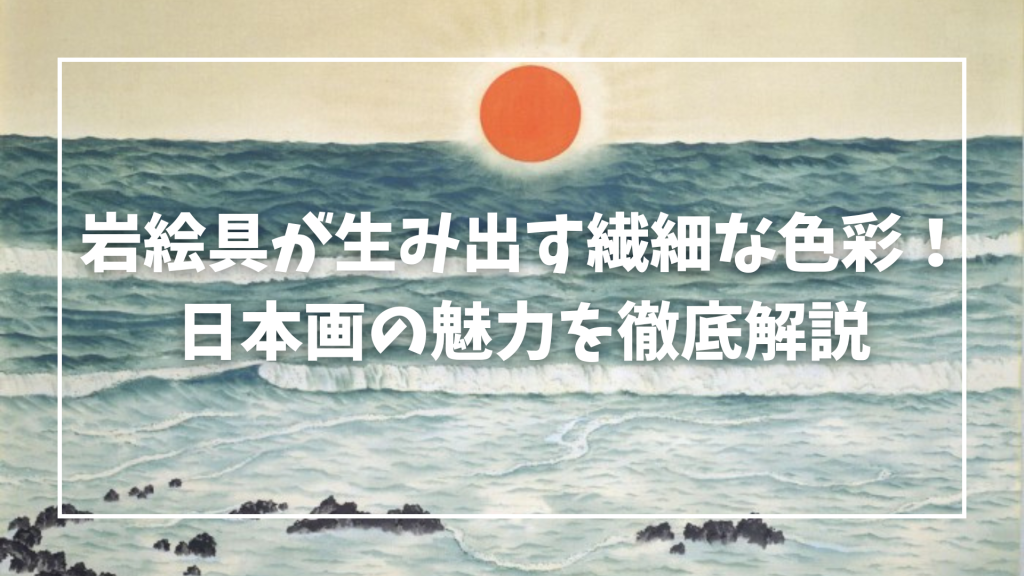
What are natural-material paints?
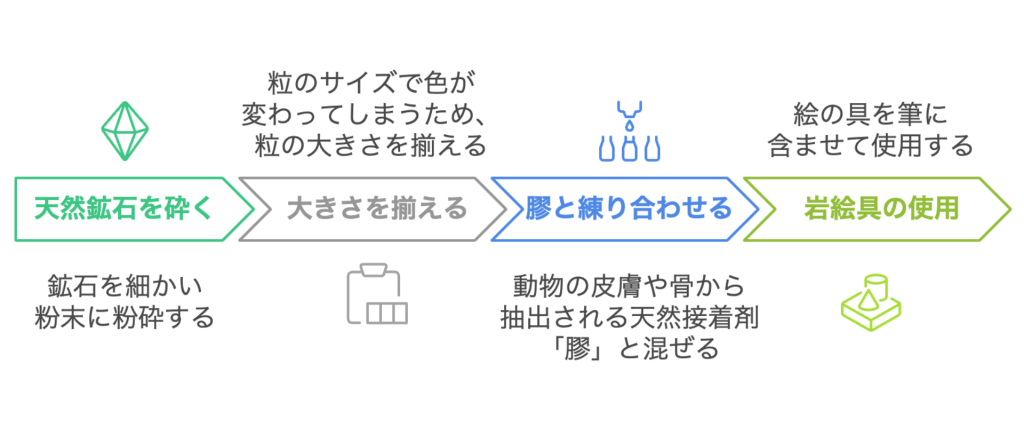
Nihonga is painting created using
traditional techniques
and
natural materials.
On
washi paper
or
silk, it uses
pigments made by binding mineral pigments and gofun (powdered shell) with nikawa (animal-hide glue),
producing a distinctive texture and colors of remarkable depth.
The pigments have a brilliance like crushed gemstones, and one of their charms is how their expression shifts depending on the angle at which light strikes them.
Unlike ordinary paints, their particles are coarse, so they are fixed onto washi or silk rather than canvas.
The deep colors and distinctive texture that only mineral pigments can produce — this is precisely the appeal unique to nihonga!
The appeal of nihonga, born from delicate brushwork!
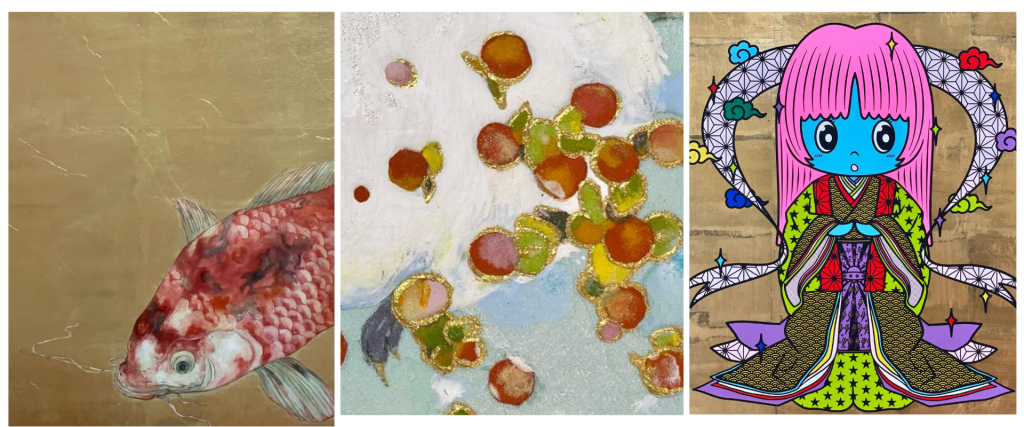
In nihonga, every single line and every layering of color is exquisitely delicate.
By using a brush to build up paint slowly, soft expression with a sense of depth comes to life.
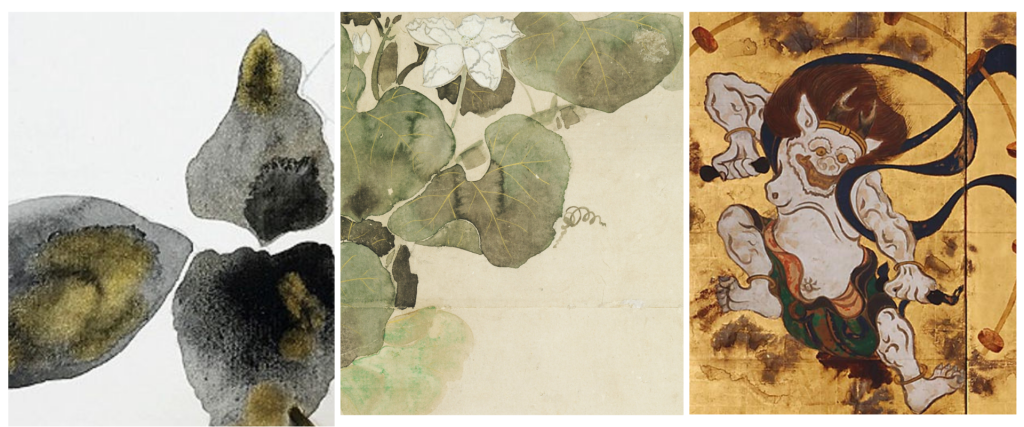
Tarashikomi
A technique of letting pigment bleed together with water to create gradations and a distinctive texture.
Kakiokoshi
A technique of layering mineral pigments again and again to bring out a three-dimensional texture.
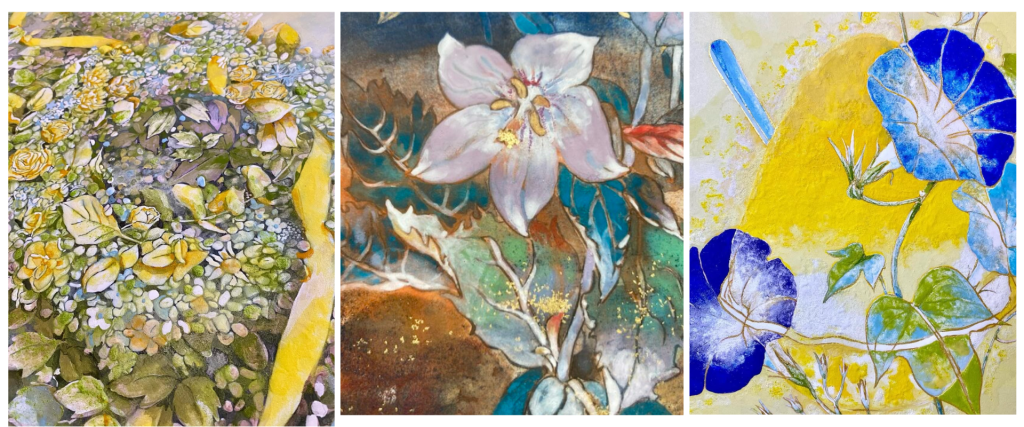
Use of gold and silver leaf
Gold and silver leaf are incorporated into backgrounds and decoration to add a sense of splendor.
Timeless masterpieces of nihonga, loved across the ages
Here we introduce works renowned the world over.
Nihonga, where powerful lines and gentle, bleeding colors coexist.
Please take your time to savor its singular appeal!
Yokoyama Taikan, “Muga (Innocence)”
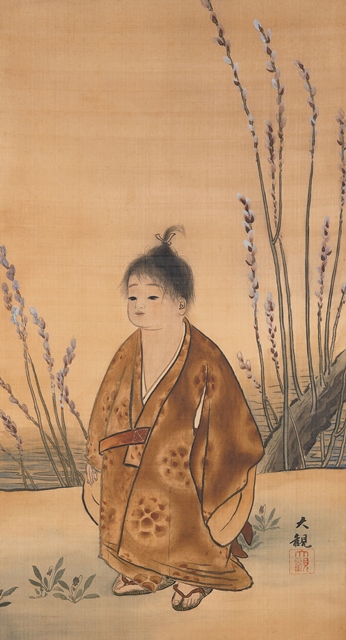
Year created: 1897
Collection: Tokyo National Museum
A signature work by the master of nihonga, Yokoyama Taikan. Using the tarashikomi technique, it creates a soft, dreamlike atmosphere.
Katsushika Hokusai, “Thirty-six Views of Mount Fuji”
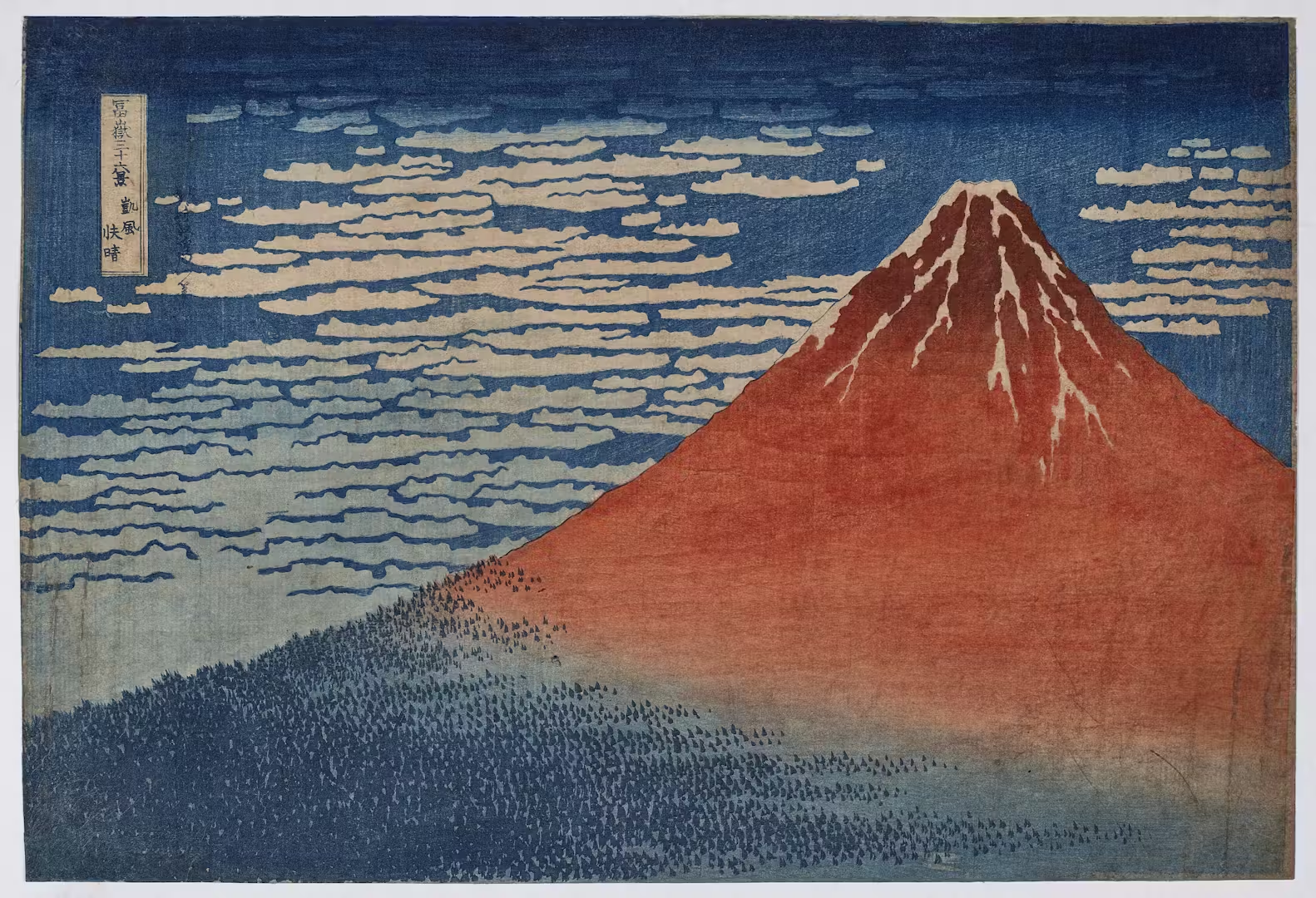
Year created: circa 1831 (estimated)
Collections: the British Museum, the Metropolitan Museum of Art, and others (multiple impressions exist)
Hokusai, known for his woodblock prints, also left behind many works that drew on nihonga techniques. The “Thirty-six Views of Mount Fuji” in particular embodies the simple yet powerful expression that nihonga possesses.
Bringing nihonga closer to you!
View the real works at museums and exhibitions
After all, seeing the real thing up close is best!
The texture of the pigments, the flow of the brush, the fine details — these carry an emotional impact that only the real work can deliver.
Many museums offer beginner-friendly guided tours and audio guides, so do make the most of them!
Display nihonga posters and art books
Keeping a favorite work close at hand as a poster or reproduction is also a lovely idea.
Bring it into your home interior, and you can savor it at leisure in your everyday life!
These days, there's also a rich array of goods and postcards featuring nihonga-inspired designs.
The fusion of nihonga and digital art
In recent years, more and more artists are reproducing nihonga techniques digitally and taking on new forms of expression.
In particular, there are many works that bring the influence of nihonga into the visual design of anime and games, and the aesthetic sensibility of nihonga is being newly appreciated around the world.
In closing
Nihonga is an art whose appeal lies in its distinctive expression, painted with delicate brushwork using natural mineral pigments and washi paper.
While inheriting age-old techniques, it continues to captivate many people even today through new forms of expression and its fusion with digital technology.
By viewing the real works at museums or enjoying your favorite pieces through posters and art books, you can come to feel nihonga much closer to home.
The world of nihonga, where tradition and innovation coexist. Do take that step in and savor its profound appeal!
Why not add a touch of art to your space?
▶
+ART
▶
ONLINE SHOP


