About the +ART Column
In the +ART column, we share articles designed to make art feel a little closer to home. From seasonal artist recommendations to clear, beginner-friendly explanations, we explore the appeal of art from many angles. Our aim is to help you find ideas for letting art slip naturally into everyday life. We hope you'll feel free to enjoy the world of art.
Contents
- Introduction: Why does Impressionism matter in the history of art?
- 1. From Realism to Impressionism: the currents and upheavals of the age
- 2. The characteristics and innovations of Impressionism
- 3. Leading Impressionist painters and their works
- 4. Post-Impressionism: beyond Impressionism
- 5. The influence of Impressionism on contemporary art
- Summary: the enduring appeal of Impressionism
Introduction: Why does Impressionism matter in the history of art?
Impressionism was a revolutionary movement, born in France in the latter half of the 19th century, by painters who transformed the course of art history. Unlike the history and religious paintings prized by the academic art that came before, they depicted everyday scenes and modern city life, placing emphasis on the fleeting play of light and shifts of color.
In this article, we explore how Impressionism came about, what characteristics it had, and what influence it went on to have on later art.

1. From Realism to Impressionism: the currents and upheavals of the age
In the 19th-century art world, academic art was the mainstream, and history and religious paintings grounded in rigorous technique were held in high regard. But against a backdrop of social change brought by the Industrial Revolution and political upheaval, a new artistic current emerged. That was "Realism."
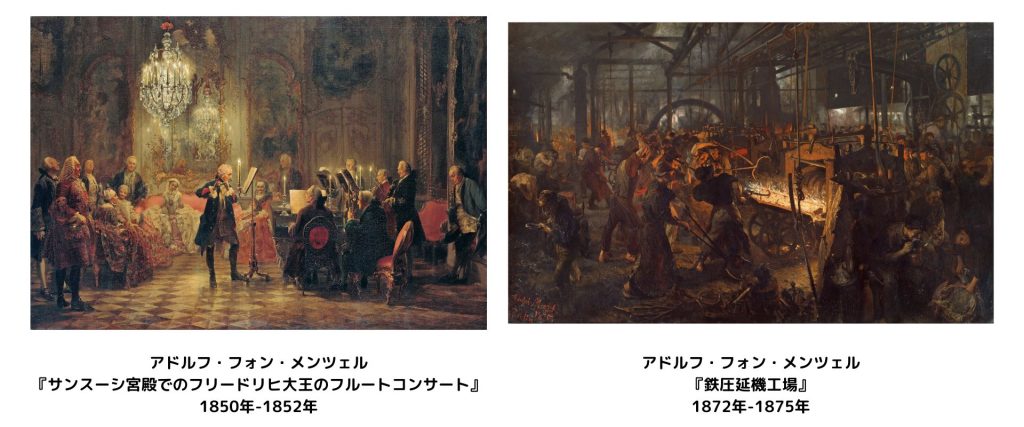
Realist painters placed importance on depicting actual society rather than the world of royalty, nobility, or myth. The German painter Adolph von Menzel, for example, painted the daily life of the emperor and the figures of laborers, portraying the society of his time with realism.
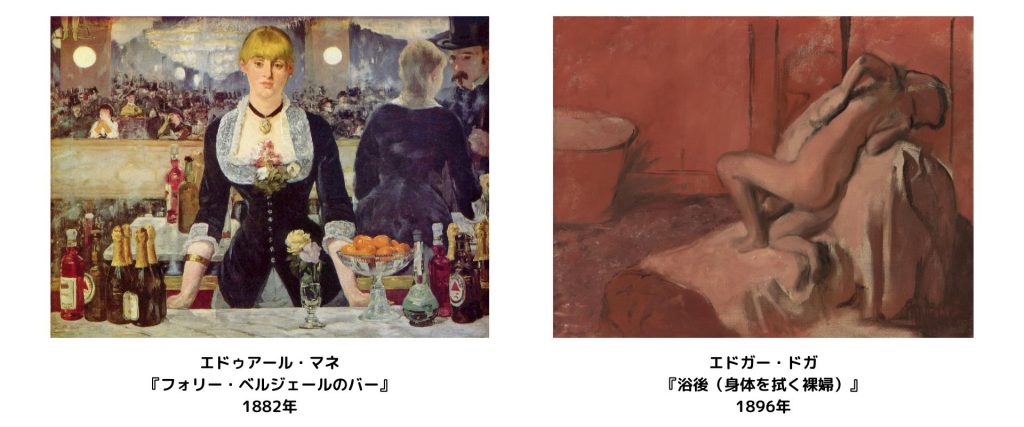
By the 1860s, a new generation of painters such as Manet and Degas appeared and began to seek out styles different from the existing Realism. They painted scenes of city life, theaters, cafés, and other familiar settings, coming to value the first visual impression that met the eye. This is what led on to Impressionism.
2. The characteristics and innovations of Impressionism
Impressionist painters took an approach different from traditional painting.
Let's look at a few of its characteristics.
Emphasis on changes in light and color
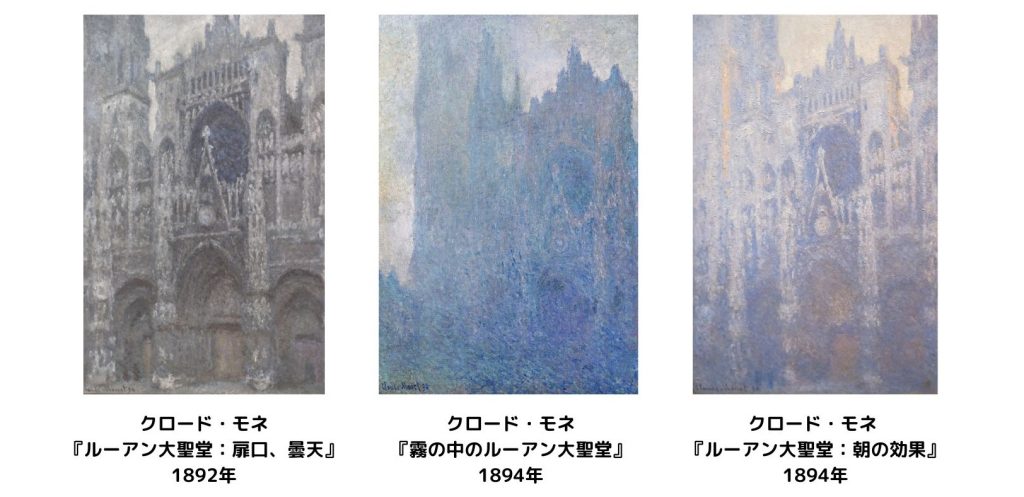
By working under natural light, Impressionist painters captured the way light changed over time and the shifting of color. Whereas the earlier academic art was painted under steady, artificial light, Impressionist works focused on realistically capturing the changes of color at sunrise, dusk, or with the weather. In Monet's "Rouen Cathedral" series, the same building is painted under different times of day and lighting conditions, beautifully expressing the transitions of nature.
Divided brushwork (broken color)
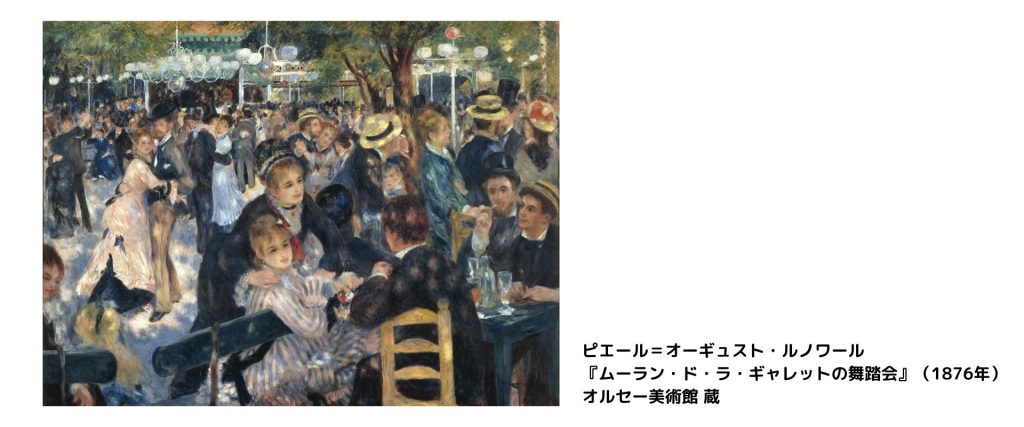
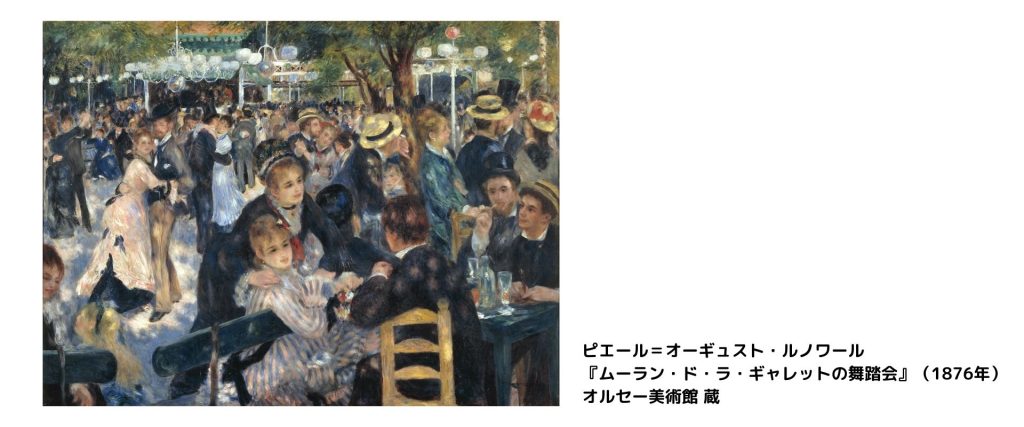
Impressionist painters used a technique called "broken color," laying short strokes of pure paint side by side without mixing them. Seen from a distance, the colors blend optically, giving rise to a more vivid effect of light. In Renoir's "Bal du moulin de la Galette," for example, this technique is used to softly express the dappled sunlight and the movement of the dancing people.
Plein air painting (painting outdoors)
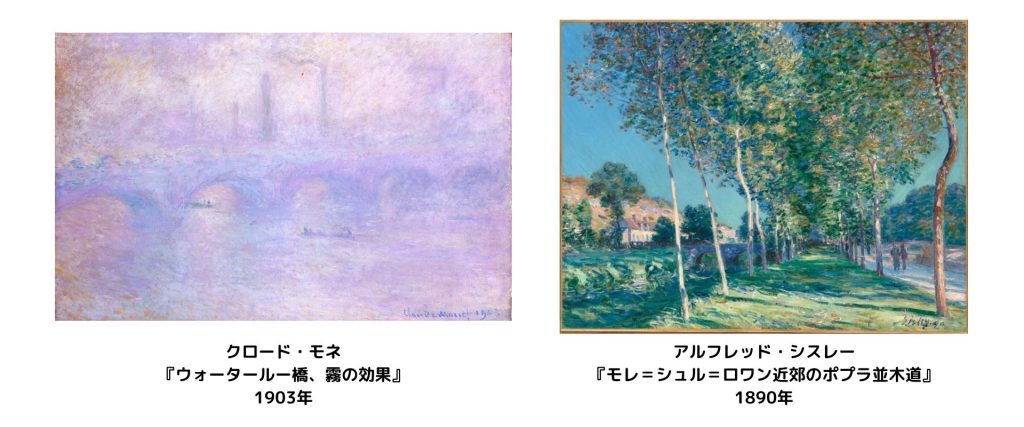
Rather than working indoors as was traditional, Impressionist painters actively embraced "plein air painting"—painting outdoors from life. By going outside, they could directly observe the changes of color and the effects of the atmosphere under natural light, and reflect them in their work. Monet and Sisley in particular made frequent use of this method, leaving behind many works that capture the shifting of light and the freshness of the landscape.
3. Leading Impressionist painters and their works
To sum up the characteristics of Impressionism: the painters depicted ordinary, everyday scenes and people, and placed emphasis on expressing the changes of light through bright color and light, airy brushwork. Their aim was to capture the impression of a moment, breaking the rules of conventional art while opening up new possibilities of expression. With these characteristics in mind, let us introduce the painters who represent Impressionism and their signature works.
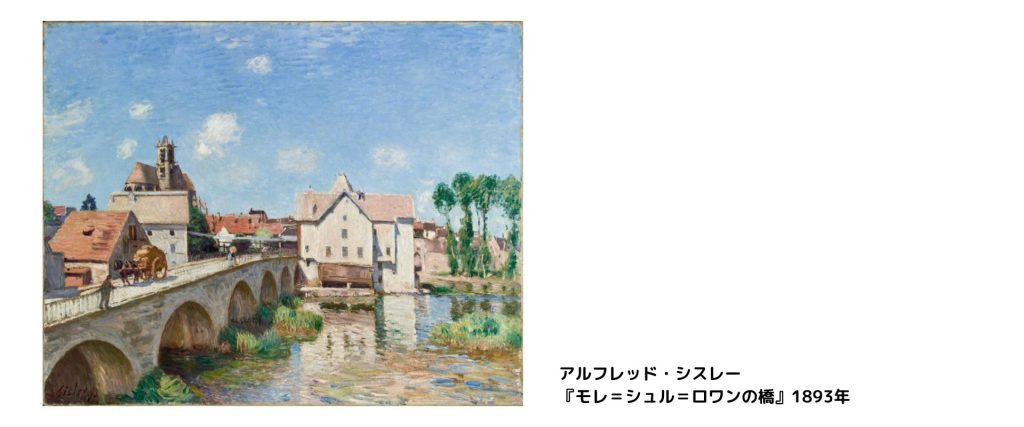
Alfred Sisley: "The Bridge at Moret-sur-Loing"
A master of landscape, he left behind many works distinguished by their treatment of light.
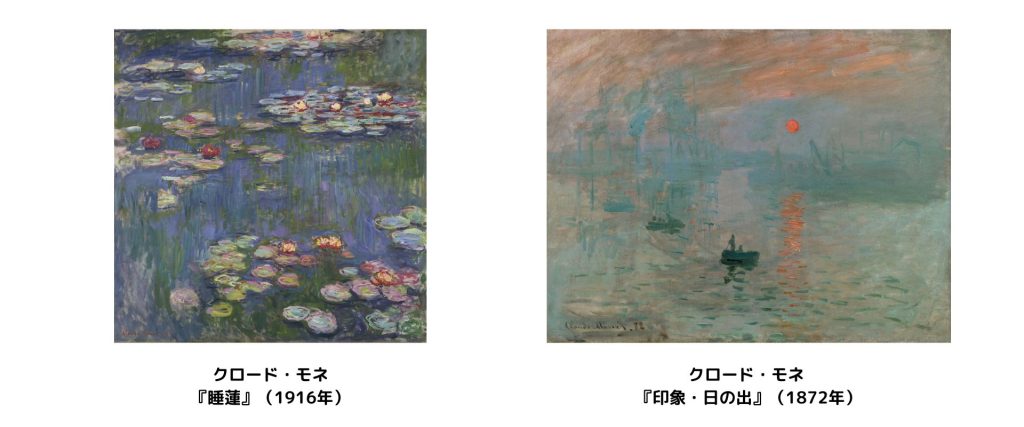
Claude Monet: "Impression, Sunrise," "Water Lilies"
Monet painted "Impression, Sunrise," the work that gave Impressionism its name, and pursued the changes of light and color.
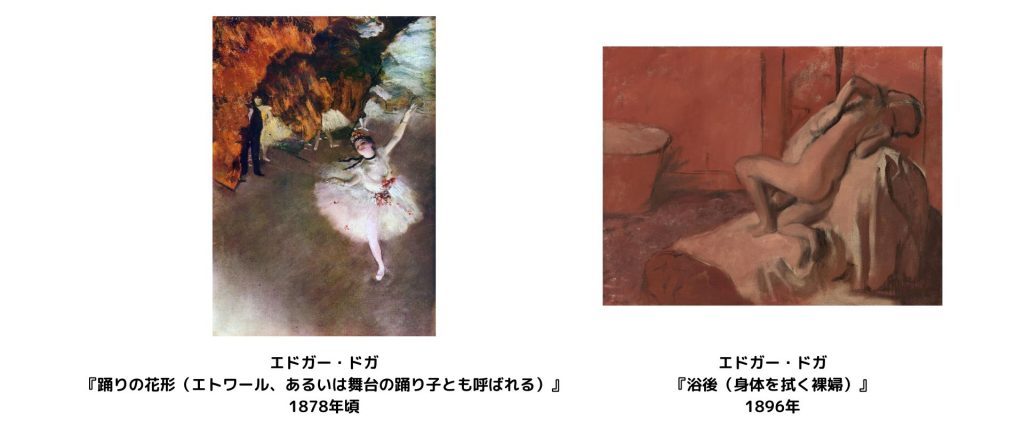
Edgar Degas: "The Dance Class," "After the Bath"
Famous for his paintings of ballet dancers, his works possess a distinctive beauty in their movement and composition.
Pierre-Auguste Renoir: "Bal du moulin de la Galette"
His works capture the joyful expressions of people, characterized by bright, soft color.
4. Post-Impressionism: beyond Impressionism
The Impressionist painters gave rise to new forms of expression, but in time some grew dissatisfied with its methods. Building on the Impressionist technique, they pursued more individual and symbolic expression and more structural approaches, giving rise to a new current known as "Post-Impressionism."
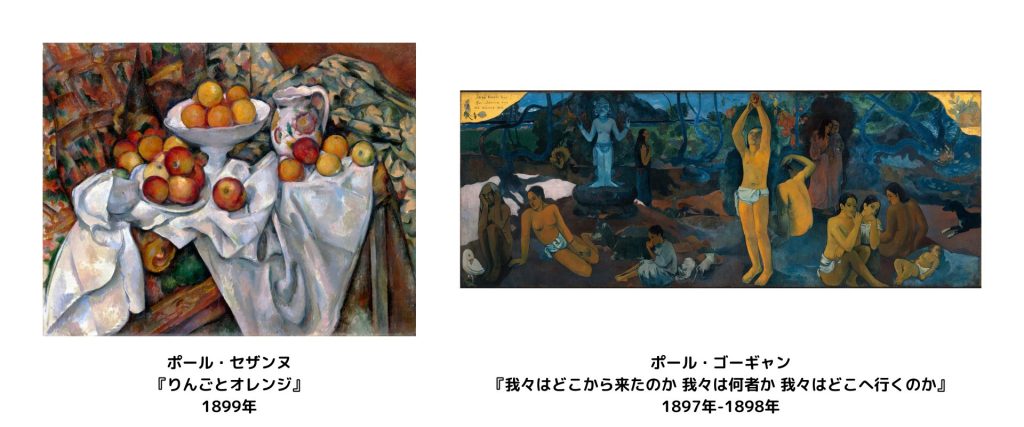
While carrying on the Impressionists' exploration of light and color, the Post-Impressionist painters placed greater emphasis on inner expression and the structure of art. Paul Cézanne, for example, broke his subjects down into geometric forms, developing a revolutionary theory of painting that led on to Cubism. Paul Gauguin used vivid color and symbolic forms to express spirituality and mystery, influencing the later Expressionists and the Nabis. Vincent van Gogh, meanwhile, used intense brushwork and powerful color to project his inner emotions and states of mind onto the canvas. His works became a foundation for the later Expressionism and had a profound influence on 20th-century art.
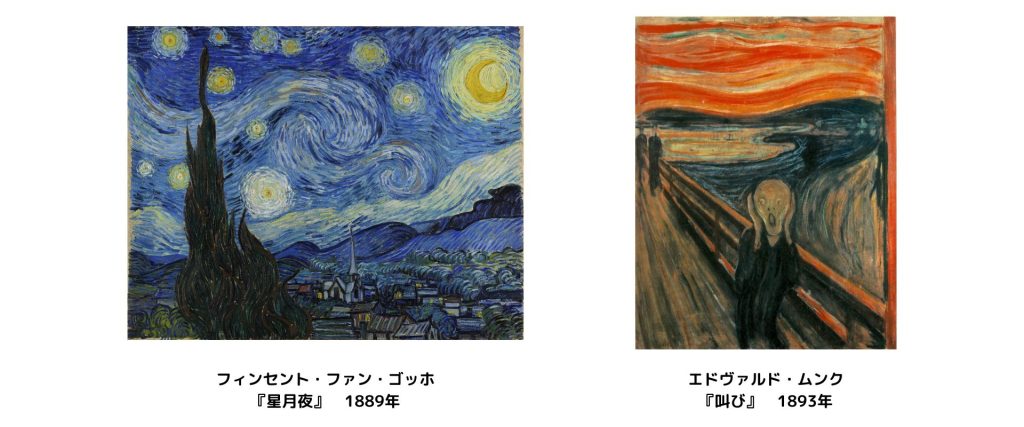
Edvard Munch, too, was one of the figures of Post-Impressionism; in his signature work "The Scream," he symbolically depicted inner anxiety and loneliness, pointing toward a new direction in art that would lead on to Expressionism.
In this way, while inheriting the techniques of Impressionism, Post-Impressionism developed into a diverse range of artistic movements as painters sought out new forms of expression from their own individual perspectives.
5. The influence of Impressionism on contemporary art
The techniques and ideas of Impressionism had a great influence on the art of the 20th century and beyond.
In particular, it strongly influenced the following artistic movements.
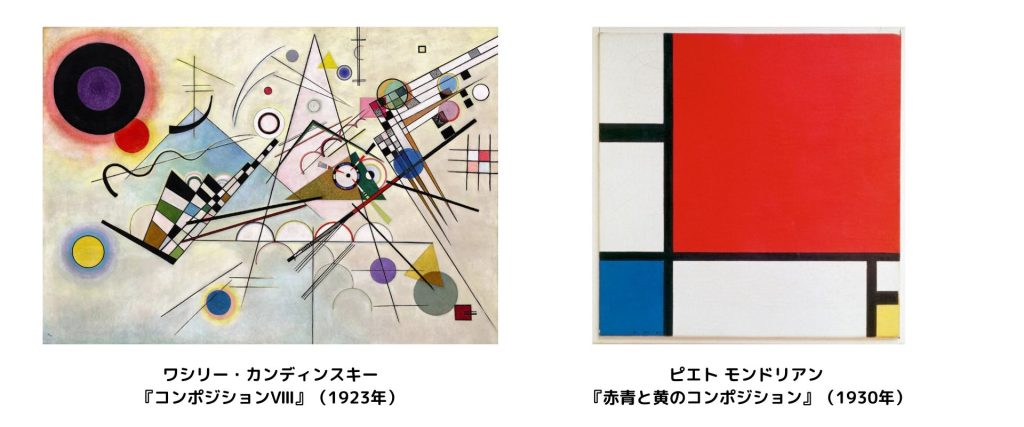
Abstract painting (Kandinsky, Piet Mondrian)
A style of art that does away with representational forms, expressing emotion and concept through the composition of color and line.
Cubism (Picasso, Braque)
An artistic movement characterized by a technique of breaking objects down into geometric forms and depicting them from multiple viewpoints.

Fauvism (Matisse)
A school that used vivid primary colors and bold brushwork, placing emphasis on the expression of emotion.
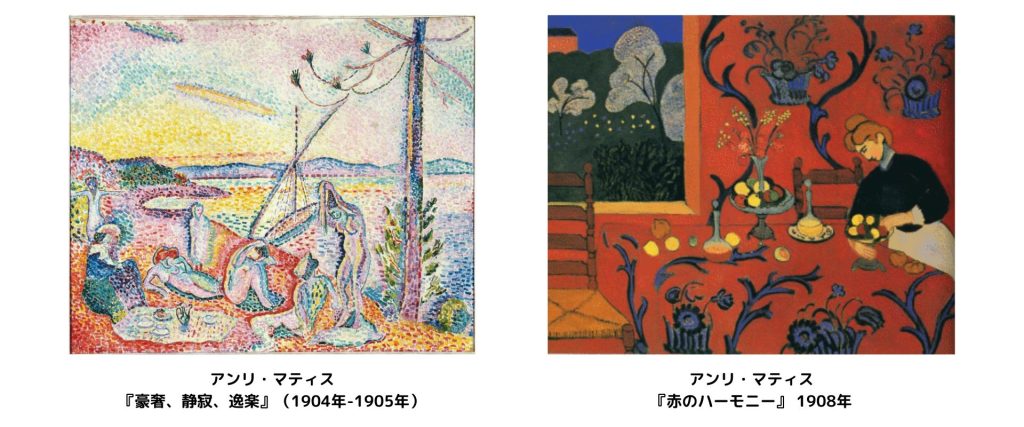
It was carried on by these and other schools, leading to the development of contemporary art.
6. Summary: the enduring appeal of Impressionism
Impressionism brought a revolution to the world of art and continues to captivate many people to this day. Their works convey to us the beauty of light and color, letting us feel the everyday scene and the brilliance of a fleeting moment.
The Post-Impressionist painters, meanwhile, developed the Impressionist technique while seeking out their own forms of expression, exerting a great influence on later art movements. Through their works, we can gain a deeper understanding of the currents of art history and the diversity of art.
Why not view Impressionist works at a museum or exhibition and feel their appeal for yourself?
In closing
We hope you enjoyed this article. If it has helped you feel a little closer to art, nothing would make us happier.
+ART, built around the concept of “enjoying art,” offers services that let you experience contemporary art more fully—from planning and running exhibitions to selling works through our online shop.
With a focus on talented emerging artists, we carefully curate works full of individual character! We carry a diverse range of art, from paintings and beyond, so that even first-time buyers can shop with confidence.
To help you appreciate each work more deeply, we also share useful information in our column—artist interviews, ways to display art, tips on buying, and more.
We hope it becomes an opportunity for art to blend into your daily life and color it more richly.
Why not add a little art to your space?
▶ +ART
▶ ONLINE SHOP