About the plus art Column
The plus art column delivers articles designed to make art feel closer to you. We introduce recommended artists for each season, offer clear explanations for those new to art, and share the appeal of art from many angles. Our aim is to help you discover hints for letting art settle naturally into everyday life. Please feel free to enjoy the world of art.
Contents
- Introduction: A Journey Tracing the Art of Power and Glory
- 1. Assyrian Art: A Sculptural Culture of Power and Narrative
- 2. The Expansion of Art and the Spread of Culture
- 3. Neo-Babylonia and the Aesthetics of the Ishtar Gate
- 4. Achaemenid Persian Art: Expression of Fusion and Grandeur
- 5. A World of Exquisite Craft: The Winged Goat
- Conclusion: The Fusion of “Power” and “Beauty” Seen in Ancient Art
Introduction: A Journey Tracing the Art of Power and Glory
The ancient Near East is a vast treasure trove of artistic culture that has influenced even today’s art and architecture. Among them, Assyria and Achaemenid Persia each built their own distinctive styles, giving rise to art in which power and refinement coexist. In this article, we explore the appeal of the art these civilizations left behind!

1. Assyrian Art: A Sculptural Culture of Power and Narrative
Assyria, which ruled northern Mesopotamia, conquered Babylonia on the strength of its powerful military, and while absorbing its culture, brought forth an art of its own. Its style was established in the late 13th century BCE, during the reign of Tukulti-Ninurta I.
What is especially noteworthy about Assyrian art is its relief sculpture, grand in scale and rich in narrative. The wall reliefs themed on the king’s military campaigns and hunts combine power and grace with their dramatic compositions and delicate modeling—so much so that they can be called visual history books.

In the representative work “Date Palm and Eagle-Headed Genius,” rich volume and detail are expressed despite the low relief, boasting a level of completion that stands alongside the reliefs of Egypt and Anatolia.
2. The Expansion of Art and the Spread of Culture
Assyrian art spread along with the expansion of its empire, carrying Mesopotamian art even to the Mediterranean coast. Its influence reached as far as Phoenician art and the Orientalizing style of Greece, leaving no small impact on the later visual culture of the Mediterranean world.
3. Neo-Babylonia and the Aesthetics of the Ishtar Gate
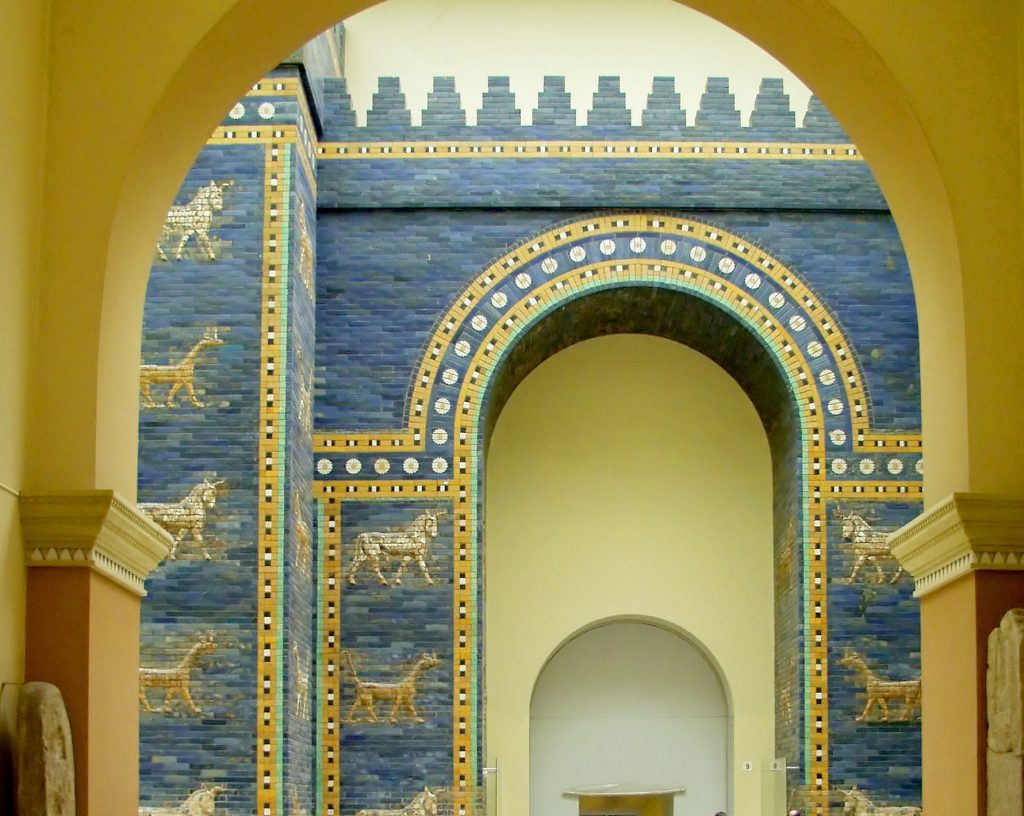
After the collapse of the Assyrian Empire, the Neo-Babylonian Empire arose in the 6th century BCE under Nebuchadnezzar II, and the capital, Babylon, was reborn as a magnificent city. The “ Ishtar Gate ,” adorned with colored glazed bricks, is its representative architectural legacy and a presence that symbolizes the splendor and aesthetic sense of the city at that time.
Yet that glory too met its end in 539 BCE at the hands of Achaemenid Persia.
4. Achaemenid Persian Art: Expression of Fusion and Grandeur
Established in the 6th century BCE through the achievements of Cyrus the Great and Darius I, Achaemenid Persia brought all of Western Asia under its rule. Skillfully fusing the artistic styles of the lands they conquered, they built an august art of their own.
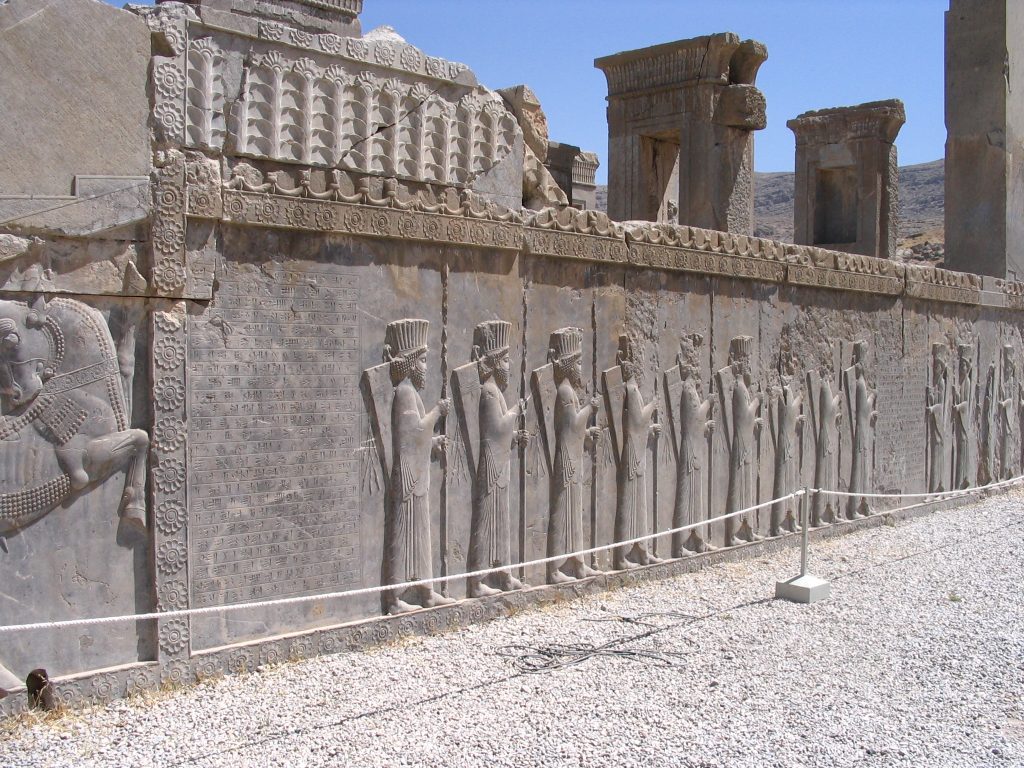
A prime example is the group of reliefs of the Apadana Palace built in the capital, Persepolis. Here the styles of Babylonia, Assyria, and Media are masterfully integrated, revealing the academic side of Achaemenid art.
5. A World of Exquisite Craft: The Winged Goat
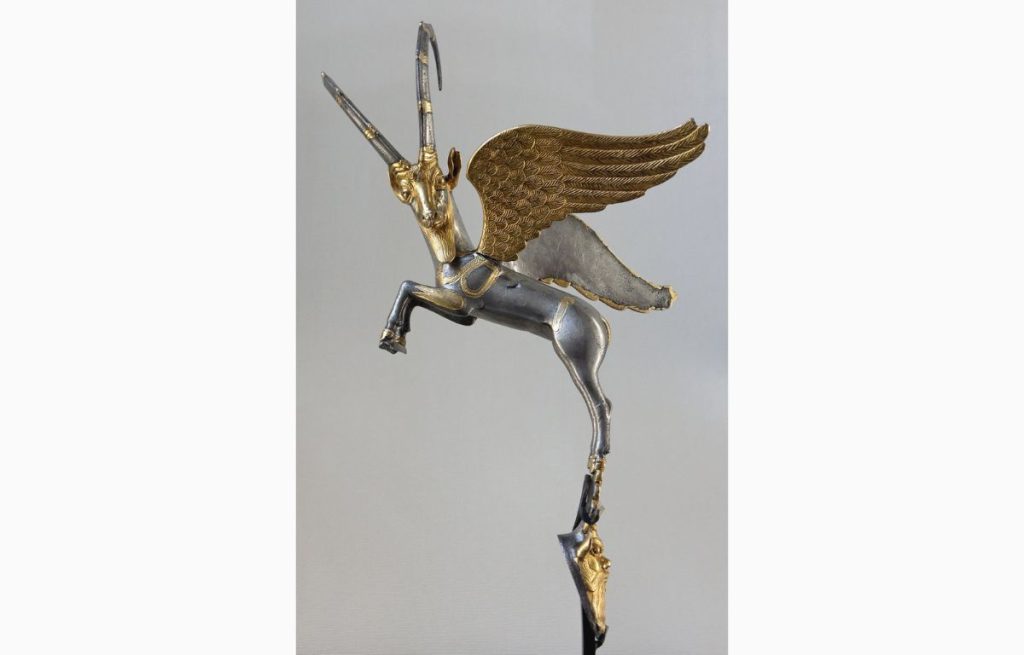
Another artistic hallmark of the Achaemenids lies in their highly developed craft techniques. The “ Winged Goat ,” inlaid with gold and silver, is the foremost example—a masterpiece fusing delicate carving with fantastical design. In addition, crafts such as glassware, cylinder seals, and metalwork boast a high level of technical achievement, suggesting that an artistic sense of beauty had permeated even into daily life.
Conclusion: The Fusion of “Power” and “Beauty” Seen in Ancient Art
The art of Assyria and Achaemenid Persia each expressed “power” and “beauty” through a different approach. Assyria embodied it in realistic reliefs that extolled military glory, and Persia in refined crafts and architecture that integrated cultures. Both, as a total art in which politics and religion, authority and sensibility became one, have exerted a profound influence on later ages.
Their expressive power and formal beauty continue to captivate us even now.
In Closing
How did you find it? We hope this article has helped you come to know art a little more deeply.
Under the concept of “enjoying art,” plus art offers services that let you enjoy contemporary art even more—from planning and running exhibitions to selling works through our online shop.
Focusing on gifted young artists, we carefully select and introduce works full of individuality! With a diverse lineup of paintings and other art, we make it easy and reassuring even for first-time art buyers.
To help you appreciate the appeal of each work more deeply, we also share useful information in our column, including artist interviews, tips on displaying art, and pointers for buying.
We hope art becomes part of your daily life and a chance to enrich your world with color.
Why not add a little art to your space?
▶ plus art
▶ ONLINE SHOP