

About the +ART Column
In the +ART column, we share articles designed to make art feel a little closer to home. From seasonal recommendations of artists to clear, beginner-friendly explanations, we explore the appeal of art from many angles. Our aim is to offer little hints that let art slip naturally into your everyday life. We hope you'll enjoy the world of art with ease.
Contents
- Introduction
- What is religious painting? A super-simple guide!
- 3 keys to reading religious paintings
- Famous religious paintings of the world — masterpieces every beginner should know
- Ideas for enjoying religious paintings
- Summary
Introduction
As you stroll through a museum, you come across mysterious figures set against shimmering gold backgrounds, dramatic scenes brimming with suffering and joy, paintings scattered with strange creatures and symbols…
These are a special kind of painting known as "religious paintings"!
Do you find yourself thinking "this looks difficult" or "this has nothing to do with me"?
In truth, religious paintings are like treasure chests packed with the thoughts and stories of people long ago.
Read this article, and the next time you see a religious painting at a museum, you'll be able to enjoy it, thinking "Ah, this is that story!"
What is religious painting? A super-simple guide!
Put simply, a religious painting is "a depiction of a religion's stories and teachings in pictorial form."
It played a role much like that of today's picture books or films.
In the past, many people could not read, so conveying the stories of the Bible or Buddhism through pictures was important.
They were also painted as objects of prayer, to deepen people's faith.
The world has many religions, each with its own religious paintings!

Even if you don't follow a religion, these paintings depict universal themes — human joy, sorrow, love, courage — so there's plenty in them that can move anyone!
3 keys to reading religious paintings
Key 1: "Who is depicted?" — A guide to the main figures
The figures in religious paintings can be identified by their distinctive "attributes" and "poses."
Here are a few examples from Christian art!
Jesus Christ
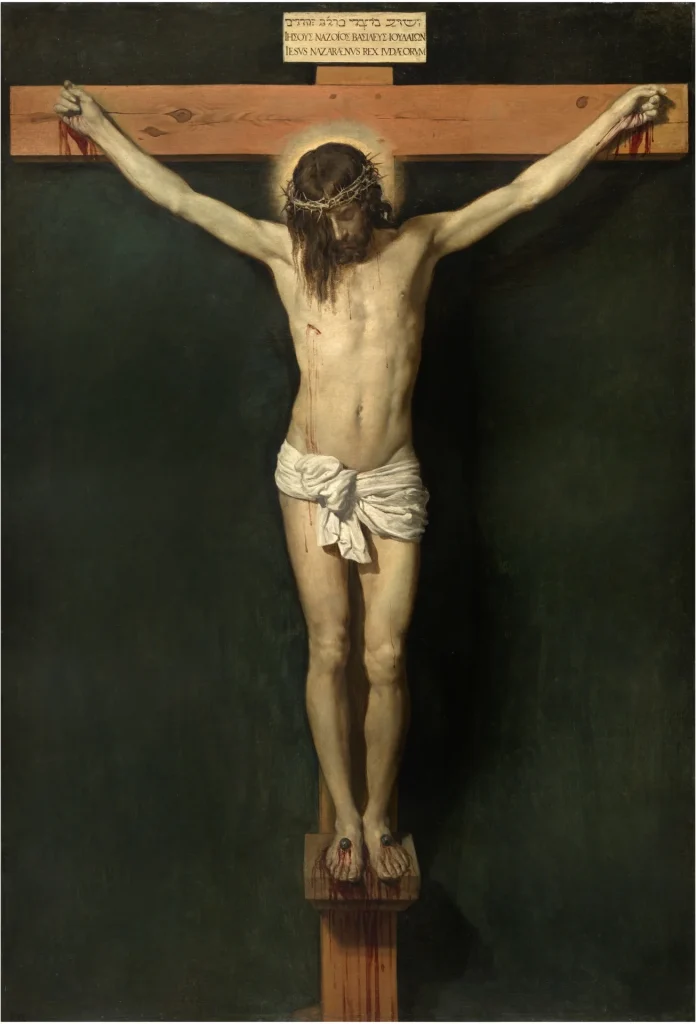
Diego Velázquez, "Christ Crucified," 1632
A halo around the head, often depicted together with the cross
The Virgin Mary
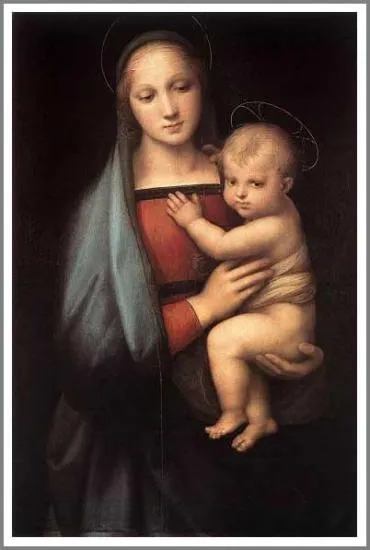
Raphael, "The Madonna del Granduca," 1506
Often wearing blue robes, and frequently shown holding the infant Jesus
Saint Peter
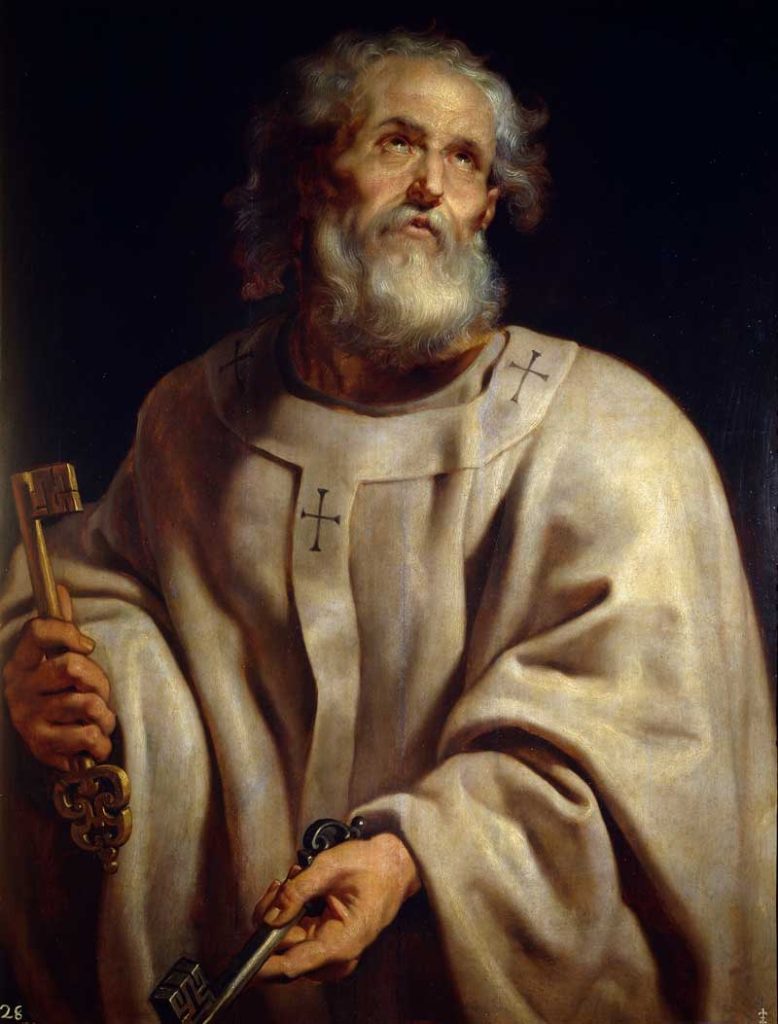
Peter Paul Rubens, "The Apostle Peter," 1612
Holding the keys said to be the keys to the gates of Heaven
Key 2: "What is happening?" — Frequently depicted stories
Religious paintings have famous scenes that are depicted over and over again!
The Last Supper
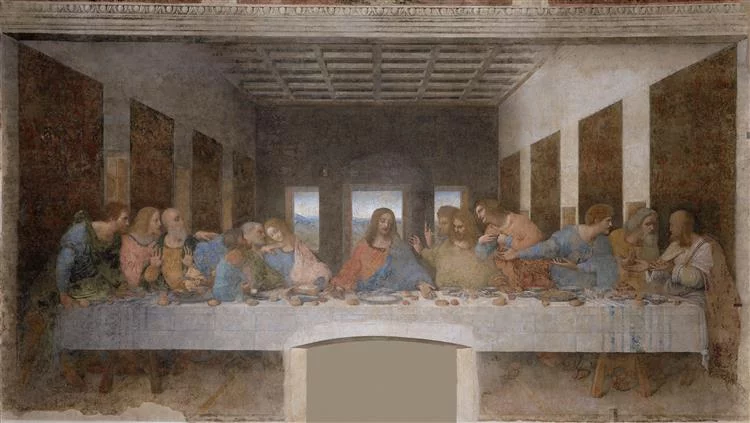
Leonardo da Vinci, "The Last Supper," 1495

Simon Ushakov, "The Last Supper," 1685
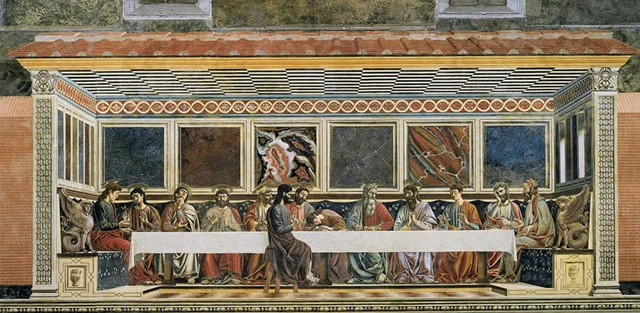
Andrea del Castagno, "The Last Supper," 1447–1450
"The Last Supper" is a scene recorded in the New Testament: the dinner Jesus shared with his twelve disciples on the night before he was crucified.
It is called the "Last" Supper because, after this meal, Jesus was crucified and died once.
The Annunciation
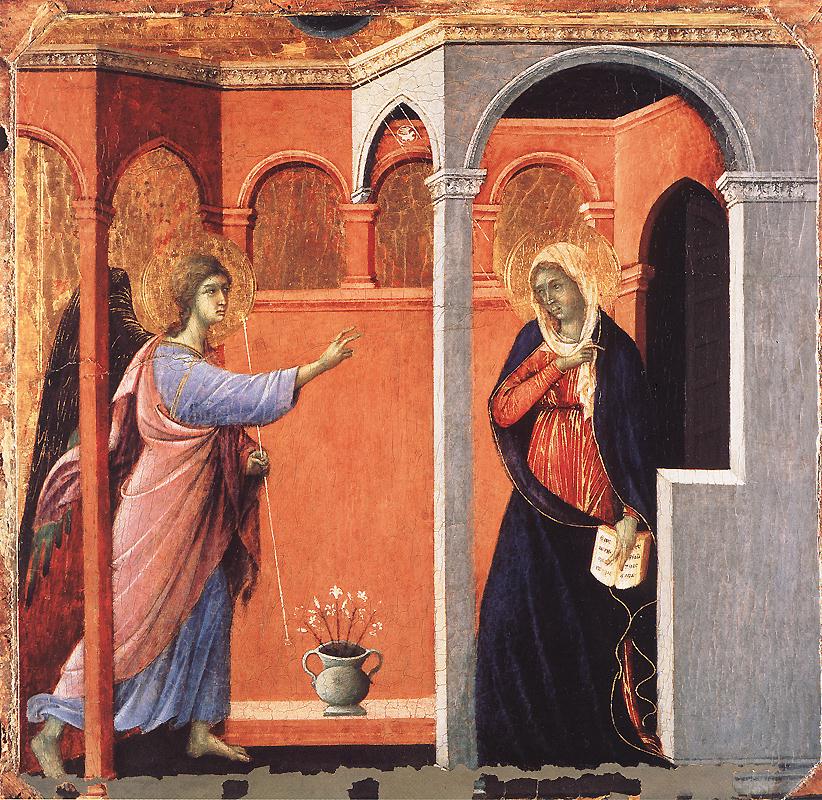
Duccio, "The Annunciation," detail from the "Maestà" c. 1308–1311
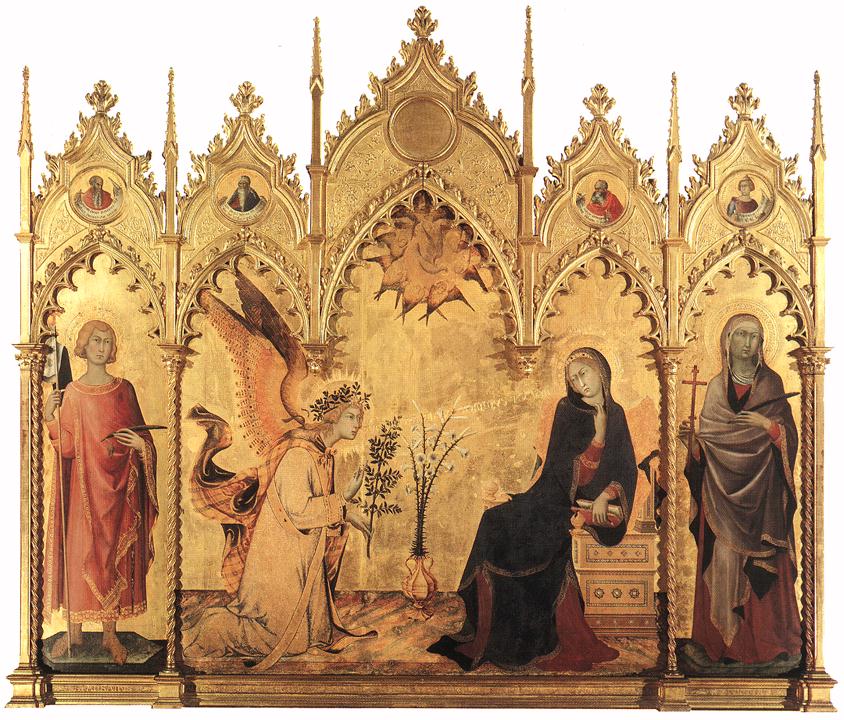
Simone Martini, "The Annunciation with St. Margaret and St. Ansanus," c. 1333
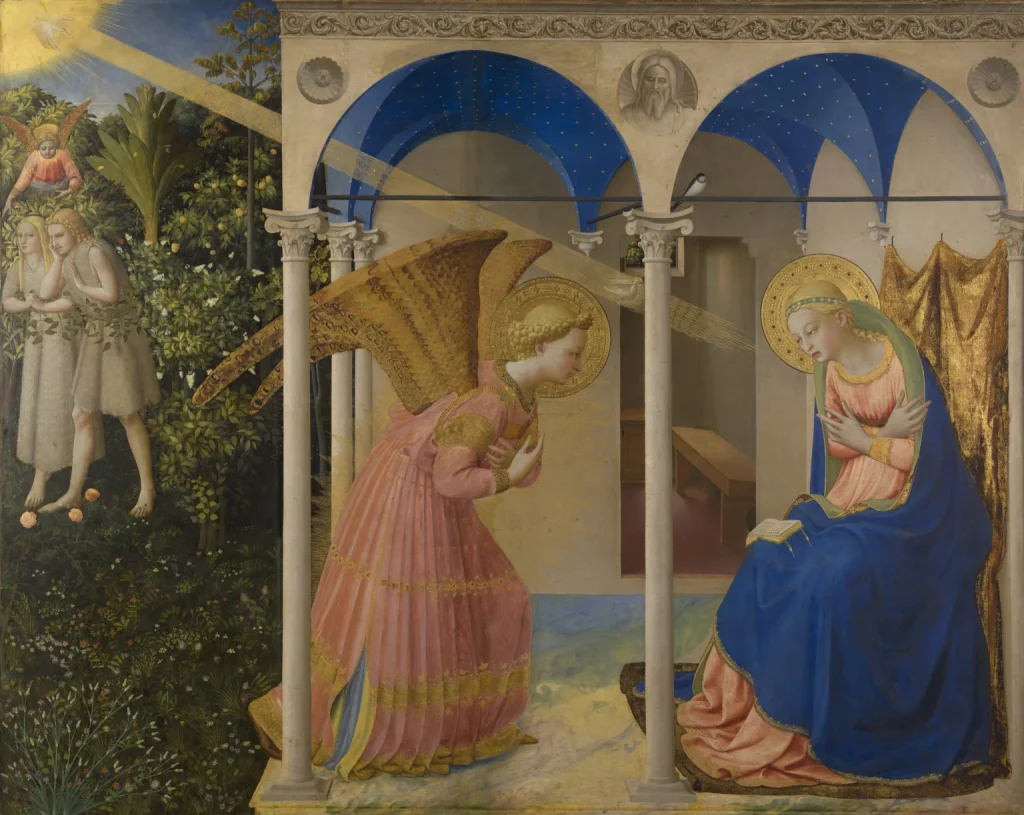
Fra Angelico, "The Annunciation," 1435
"The Annunciation" is an episode recorded in the New Testament: the moment the Archangel Gabriel announced to Mary that she would "conceive the Son of God."
Key 3: "Do the colors and objects have meaning?" — Reading symbols, made easy for beginners
Religious paintings are full of "symbols." They're rather like today's emoji!
Symbolism of colors
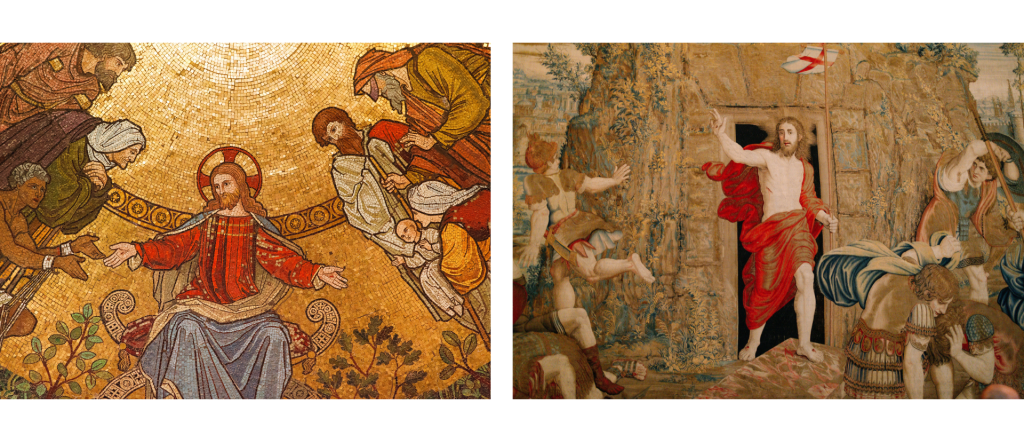
- Blue: holiness, Heaven (Mary's robe is often blue)
- Gold: eternity, the light of God (used in backgrounds)
- Red: the blood of Christ, martyrdom, love
Symbolism of animals
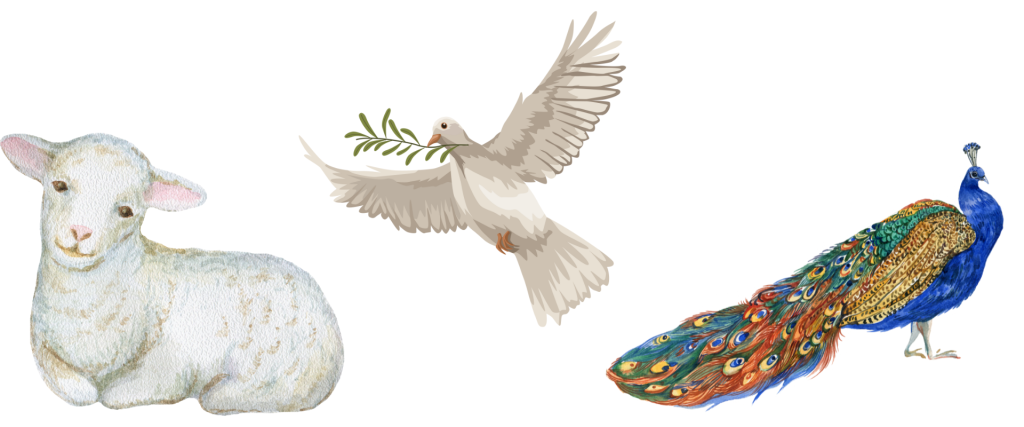
- Dove: the Holy Spirit, peace
- Lamb: Jesus Christ (called the "Lamb of God")
- Peacock: immortality, eternal life
Symbolism of plants
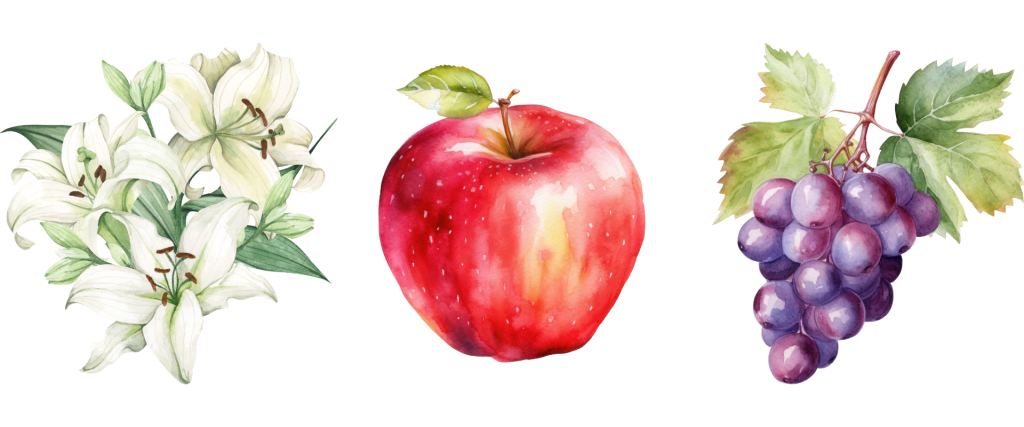
- Lily: purity (often depicted with Mary)
- Apple: original sin, temptation
- Grapes: the blood of Jesus, the Eucharist
Keep a few of these in mind, and you can answer the question "Why is this thing painted in the picture?"
A super-easy guide to telling religious paintings apart by era
The way religious paintings were painted differs greatly from era to era. Here's an easy way to tell them apart!
Byzantine art (5th–15th century)
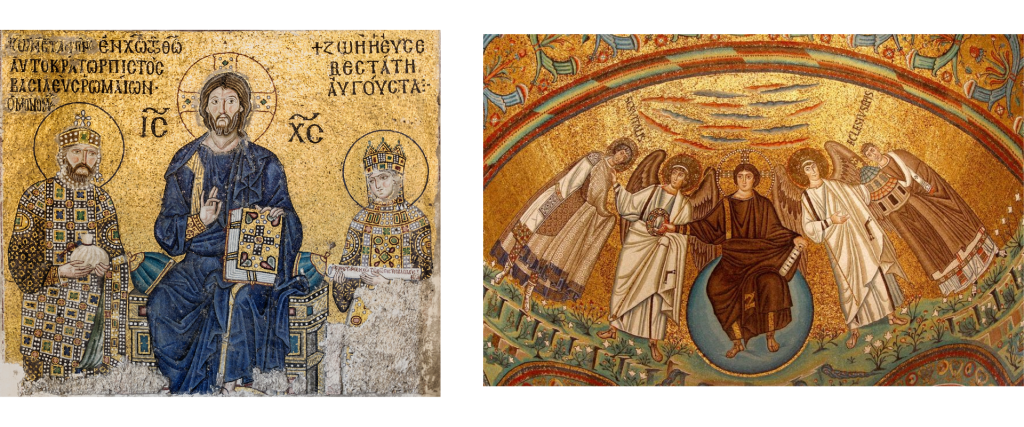
- Features: gold backgrounds, flat figures, large eyes
- Think of it as: stylized pictures, like old comics
- What to look for: a mysterious atmosphere and solemnity
Renaissance art (14th–16th century)
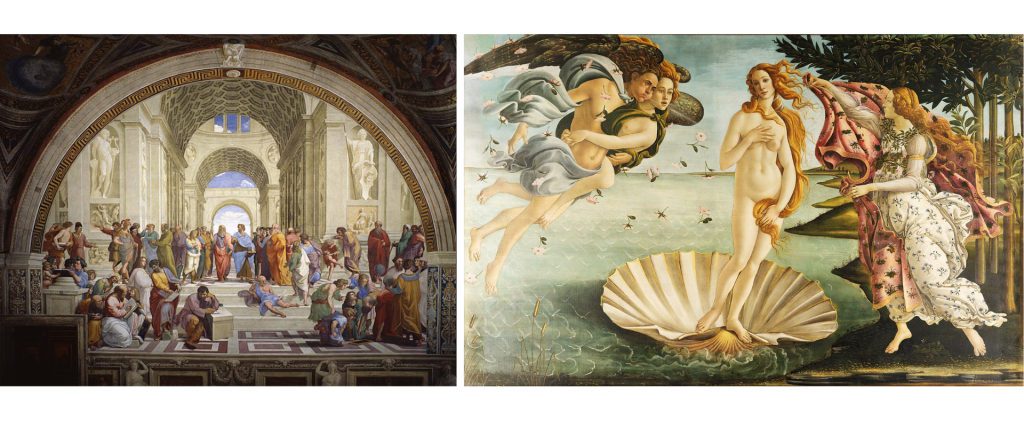
- Features: more natural figures, a sense of depth, beautiful landscape backgrounds
- Think of it as: pictures growing as realistic as photographs
- What to look for: lifelike expressions and postures, the use of perspective
Baroque art (17th–18th century)
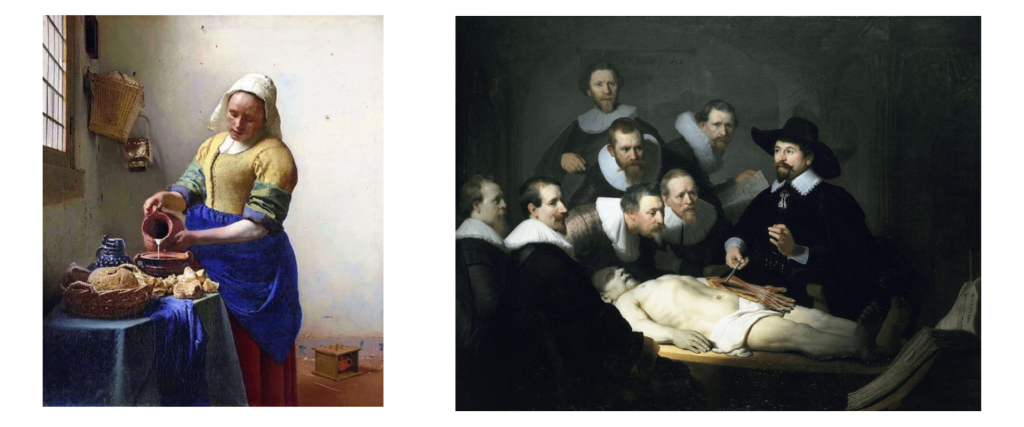
- Features: dramatic light and shadow, dynamic compositions, emotional expression
- Think of it as: a scene from a dramatic film
- What to look for: the contrast of light and shadow, powerful movement
Famous religious paintings of the world — masterpieces every beginner should know
Michelangelo, "The Creation of Adam"
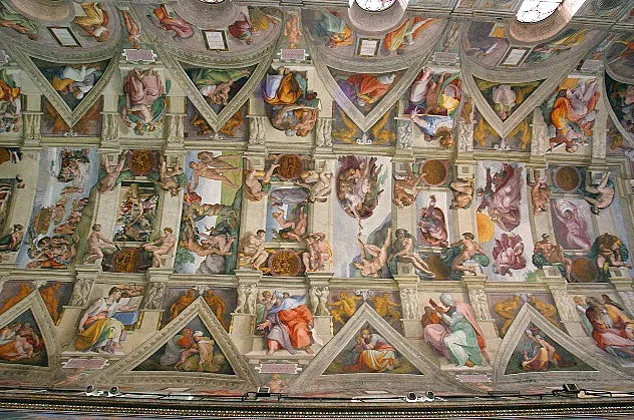
Year: 1508–1512
Where to see it: the Sistine Chapel (Vatican City)
Rembrandt van Rijn, "The Night Watch"
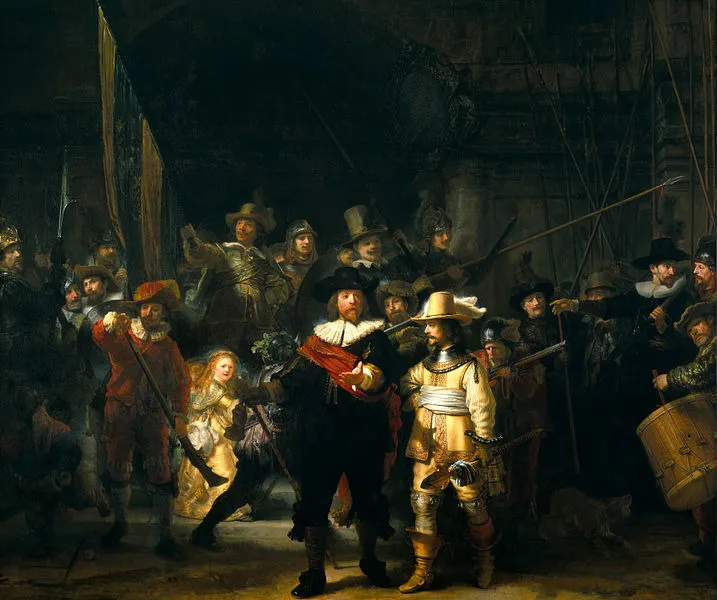
Year: 1642
Where to see it: the Rijksmuseum, Amsterdam, the Netherlands
Hieronymus Bosch, "The Garden of Earthly Delights"
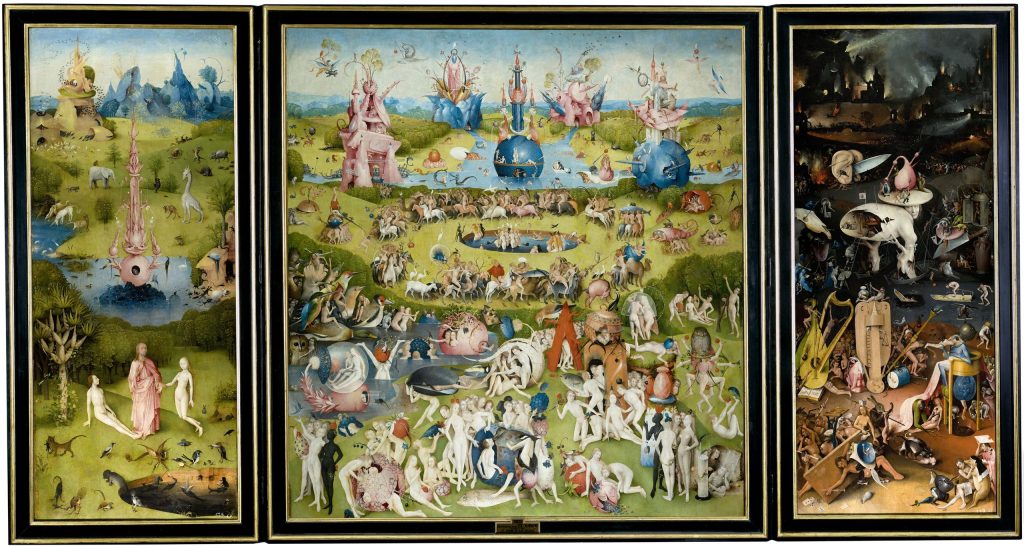
Year: c. 1500
Where to see it: the Prado Museum (Spain)
Ideas for enjoying religious paintings
Appreciating art on your smartphone

The Google Arts & Culture app
View masterpieces from museums around the world in ultra-high resolution. Zoom in and you can even see individual brushstrokes — it's breathtaking!
The DailyArt app
One masterpiece and its commentary delivered to you every day. Your knowledge grows little by little!
Modern culture inspired by religious paintings
Have you ever seen masterpiece religious paintings printed on the T-shirts or bags of fashion brands? Renaissance angels and saints are now walking the streets as stylish items!
Do look out for products featuring your favorite paintings!
Films are sometimes called "moving paintings," and religious paintings in particular were born to tell stories.
Even today's film directors learn hints about composition and the use of light from old religious paintings!
Film is just like a moving painting!? The secret of how paintings inspired film, learned even by the masters
Summary
Religious paintings are by no means "old-fashioned"; they are "timeless stories" that depict universal themes such as human joy, sorrow, love, and faith.
When you spot a religious painting at a museum, remember the points introduced in this article and try to discover "who is depicted," "what story it tells," and "what symbols are hidden within"!
The more you know, the deeper your way of seeing religious paintings becomes, and the more their beauty and storytelling can move you.
Why not take your first step into the world of religious paintings, starting today?
Why not add a touch of art to your space?
▶ +ART
▶ ONLINE SHOP


