About the +ART Column
The +ART column brings you articles that make art feel closer to home. We introduce recommended artists for each season, offer clear explanations for those new to art, and share the appeal of art from many angles. Our aim is to help you find little hints for letting art settle naturally into everyday life. We hope you'll enjoy the world of art with ease.
Contents
- Introduction: Where to Place the Starting Point of Greek and Roman Art
- 1. Cretan (Minoan) Art: A World of Free Naturalism
- 2. Mycenaean Art: The Beginnings of Order and Structure
- 3. Geometric Style Art: A Shift Toward a Structural Style
- Conclusion: The Flow of Ancient Art and Its Later Influence
- Plate Gallery
- References, Links, and Licenses
Introduction: Where to Place the Starting Point of Greek and Roman Art
When surveying ancient Greek and Roman art, the first question is the art-historical framework of "where does it begin, and where does it end?" In this article, we take Cretan (Minoan) and Mycenaean art as the wellsprings of Greek art, and focus chiefly on the period up to the Geometric style, the first true stylistic art.

1. Cretan (Minoan) Art: A World of Free Naturalism
Cretan art, which began around the middle of the 3rd millennium BCE, developed around the Palace of Knossos on the Aegean and is characterized by a maritime, naturalistic mode of expression.
In the Old Palace period (Middle Minoan, c. 2000–1700 BCE), the gorgeous pottery known as Kamares ware appeared, becoming a symbol of a Cretan culture that prospered through agriculture and trade.
Though once devastated by an earthquake, the culture reached its artistic peak in the New Palace period (c. 1700–1400 BCE).
Masterpiece: "The Lily Fresco (Spring Fresco)"
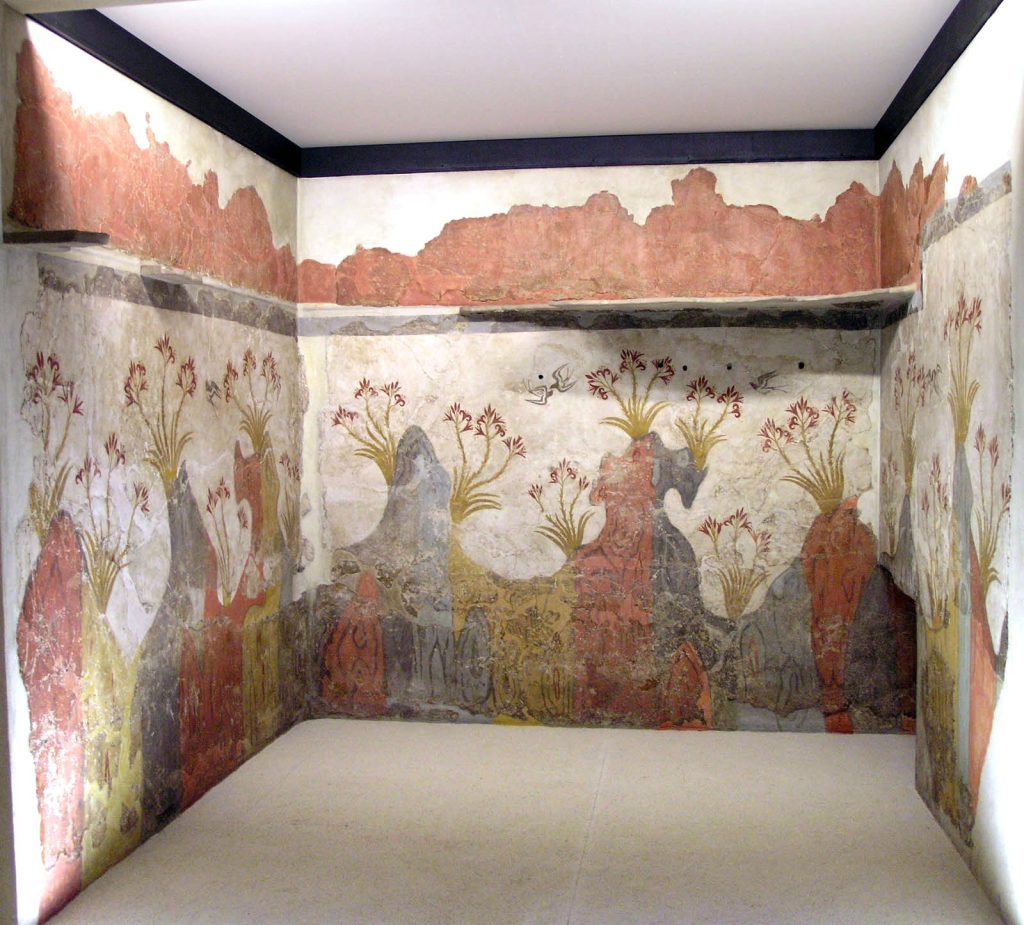
A masterpiece whose bright colors and natural curves convey the very breath of spring, it was discovered on the island of Thera (Santorini).
Source: Wikimedia Commons | Akrotiri, Spring Fresco
2. Mycenaean Art: The Beginnings of Order and Structure
In contrast to the naturalistic art of Crete, Mycenaean art (c. 1600–1100 BCE) is distinguished by robust architecture and formal composition.
Mycenaean architecture is characterized by fortified citadels built of massive stones and royal palaces of the megaron (rectangular) type. Here we see the structural quality that can be called the prototype of Greek architecture.
Masterpiece: "The Lion Gate"
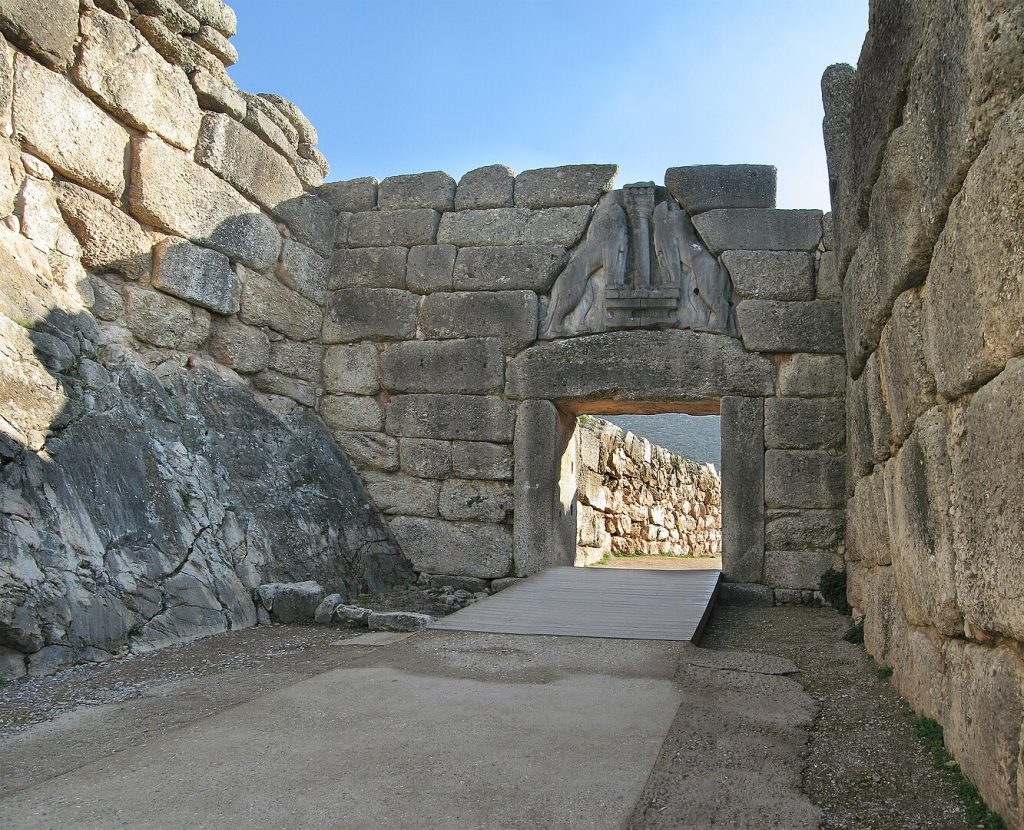
The entrance to the citadel of Mycenae, a masterpiece fusing weighty structure with religious symbolism.
Source: Wikimedia Commons | Lion Gate, Mycenae
Mycenaean pottery, too, evolved from Crete's free designs in the direction of abstraction and simplification, laying the groundwork for the later Geometric ornamentation.
3. Geometric Style Art: A Shift Toward a Structural Style
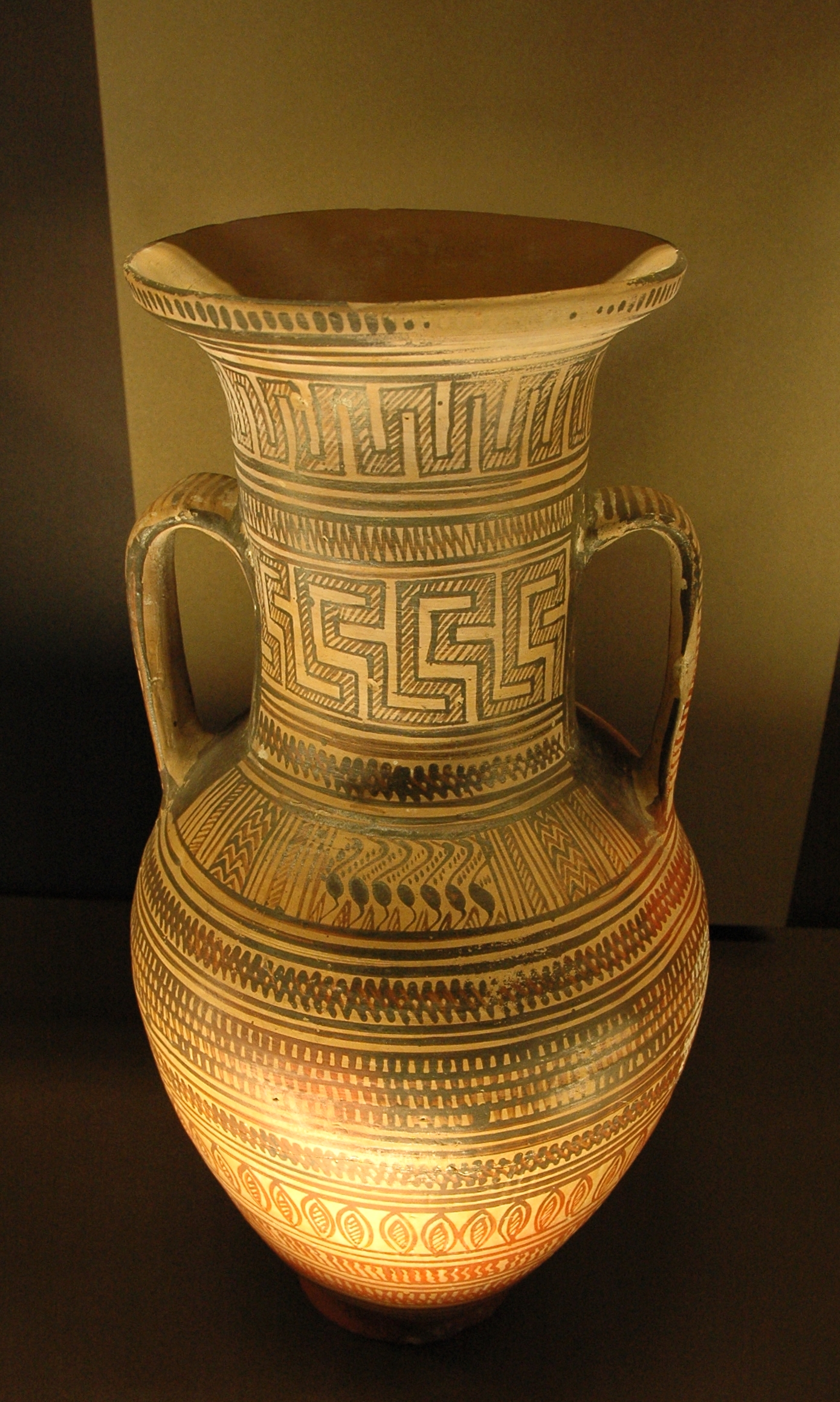
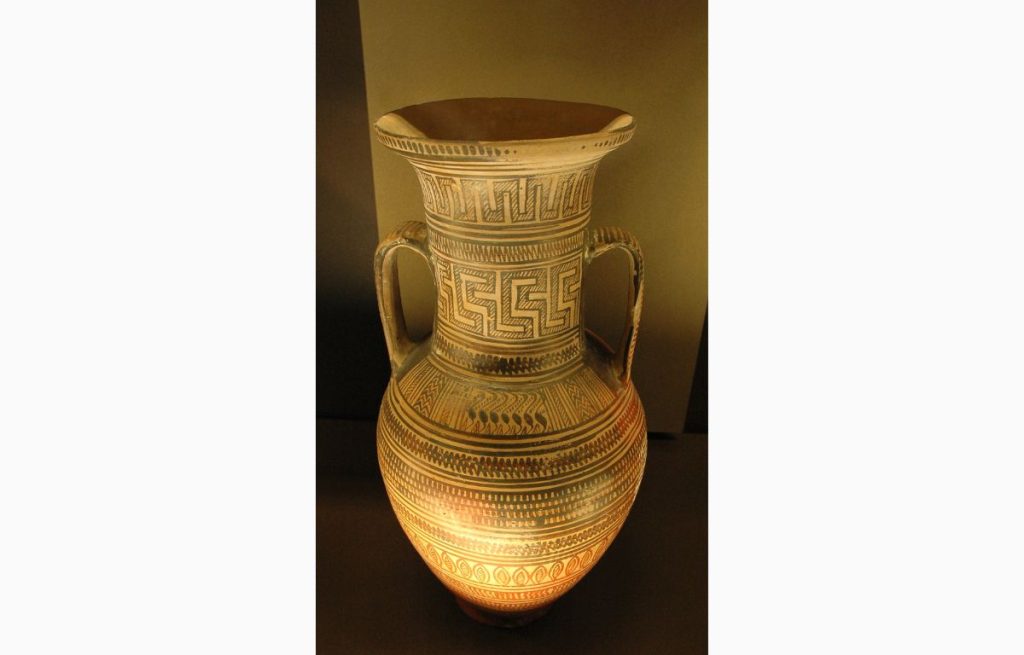
From around the 11th century BCE, with the end of Mycenaean art, the Geometric style emerged. Many examples have been unearthed at the Kerameikos in Athens, and it is characterized by compositions that divide the surface of vessels with straight lines and bands.
-
Figures such as wavy lines, zigzags, and concentric circles were arranged across the vessel's surface, placing emphasis on structure and order.
- This also represents a shift from the realism of human and animal forms toward abstraction, a style that can be called a prelude to the later sculpture of classical Greece.
Source: Wikimedia Commons | Geometric Style Krater, Louvre
Conclusion: The Flow of Ancient Art and Its Later Influence
The transition from Crete to Mycenae and then to the Geometric style tells the story of a fundamental development in Greek art: from nature to order, from freedom to structure.
Within this transformation, the soil was cultivated from which the later sculpture and architecture of classical Greece would arise, and so the foundations of Western art history were formed.
Plate Gallery
| Title | Description | Source |
|---|---|---|
| The Lily Fresco (Akrotiri) | A fresco depicting lilies blooming on the island of Thera | Wikimedia |
| The Lion Gate (Mycenae) | A symbolic sculpture set at the entrance to the citadel | Wikimedia |
| Geometric-style Vase (Krater) | Decorative pottery emphasizing geometric composition | Wikimedia |
References, Links, and Licenses
-
Wikimedia Commons (all images)
License: Public Domain (as noted at the source)
-
Source Books and Materials
- "An Introduction to Western Art History," Bijutsu Shuppan-sha
- "Color Edition: A History of Western Art," Bijutsu Shuppan-sha
- "The World of Ancient Greek Art," Yamakawa Shuppansha
- Louvre Museum Collection: https://collections.louvre.fr
In Closing
How did you find it? We hope this article has helped you come to know art a little more deeply.
Under the concept of "enjoying art," +ART offers services for enjoying contemporary art even more, from planning and running exhibitions to selling works through our online shop.
Focusing on talented young artists, we carefully select and introduce works full of individuality! With a diverse range of art, from paintings and beyond, even those buying art for the first time can shop with confidence.
And so that you can come to know the appeal of each work more deeply, we share useful information in our column, including artist interviews, ways to display art, and points to keep in mind when buying.
We hope it becomes an occasion for art to blend into your daily life and color it richly.
Why not add a touch of art to your space?
▶ Official Site: +ART
▶ONLINE SHOP



#/media/File:NAMA_Akrotiri_4.jpg)
#/media/File:Lions-Gate-Mycenae.jpg)