

About the +ART Column
The +ART Column shares stories that help you feel closer to art. We introduce featured artists for each season and offer clear explanations for those new to art, presenting its many facets from a variety of angles. Our aim is to help you discover little cues for letting art naturally find a place in everyday life. Come and enjoy the world of art at your own pace.
Contents
- Introduction
- What is framing? Its appeal and benefits
- Types of frames and how to choose
- Make the most of the margins? How mats change the look
- Easy steps you can do yourself!
- In closing
Introduction
When you display a favorite artwork, poster, or photo, how do you go about it?
Sticking it straight on the wall is fine, but putting it in a frame instantly sharpens the mood and lets you show it off more beautifully!
You might think "framing seems difficult…" but in fact there are easy ways to do it yourself!
In this article, we'll explain the basics of framing in detail — from how to choose a frame to tips for displaying.
Let's display your favorite art beautifully!
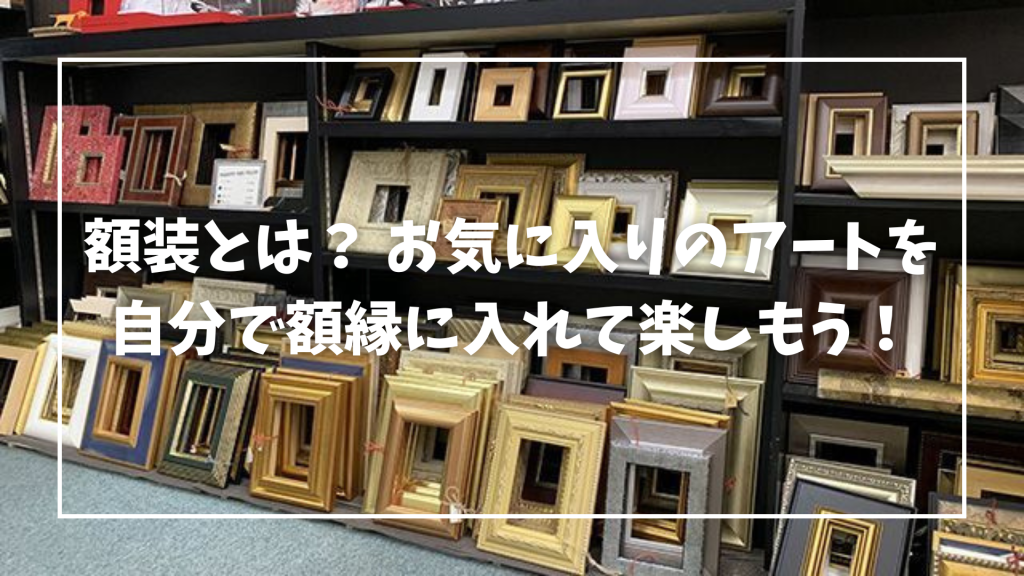
What is framing? Its appeal and benefits
What is it for?
Framing means placing an artwork, photo, poster, and the like into a frame for display.
Beyond simply tidying up the look, it plays an important role in showing the work more beautifully and protecting it!
As a way to make a favorite piece of art stand out all the more, and to enjoy it for a long time, framing is embraced by many.
Does framing change a work's impression?
By tailoring the color and design of the frame, a work's mood can change dramatically!
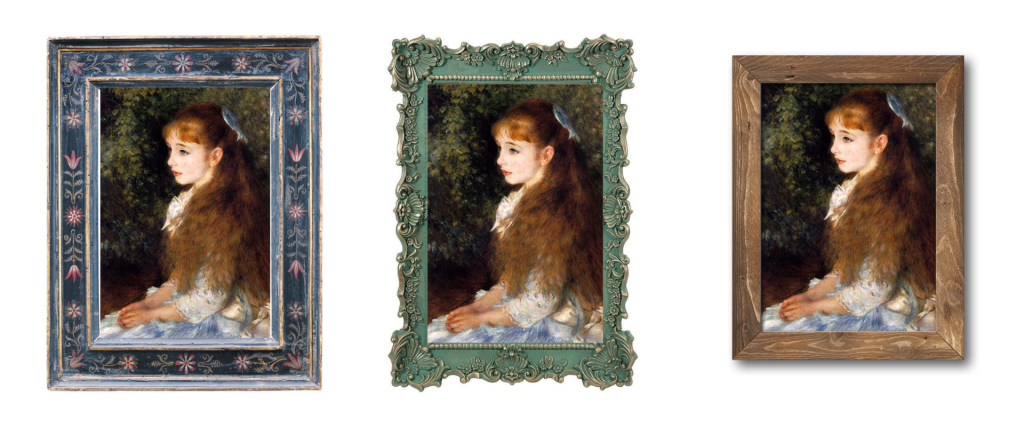
It also serves to protect the work
Framing also plays an important role in protecting artworks from dust, moisture, ultraviolet light, and more.
Paper works in particular are prone to damage, so framing prevents deterioration and helps keep them beautiful for a long time.
Carry your works into the future! A thorough guide to proper storage
Types of frames and how to choose
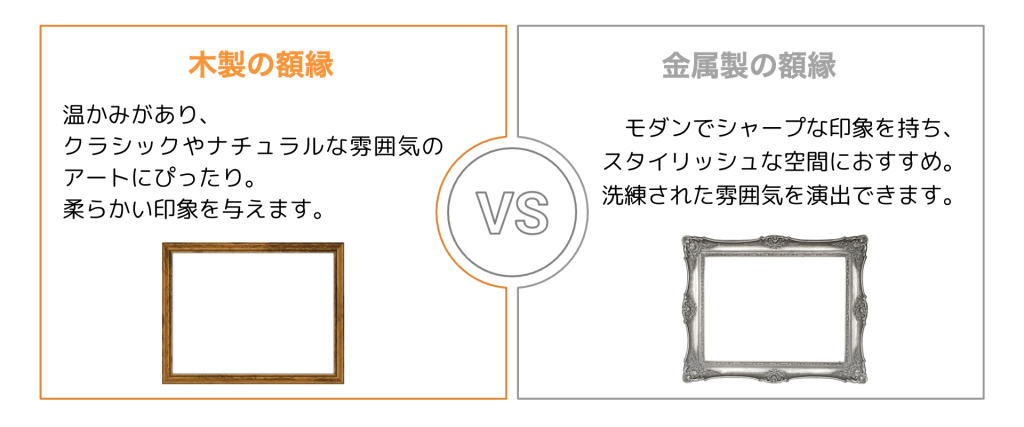
Wood vs. metal
Frames come in many materials, but broadly speaking, "wood" and "metal" are the mainstays.
Understand the features of each and choose a frame that suits the art you want to display.
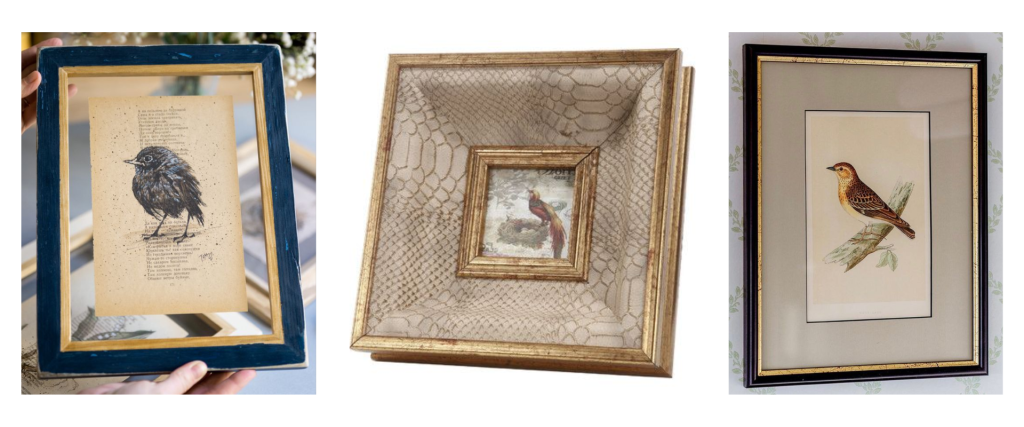
Choosing to match the mood of the art
The most important thing in choosing a frame is whether it harmonizes with the mood of the work you're displaying.
Look for the frame you love that brings out the work's appeal to the fullest!

The width and thickness of the frame are important points, too.
A thicker frame has presence and works to give the art a crisp finish, but for delicate works, a slimmer frame makes it easier to strike a balance!
Make the most of the margins? How mats change the look
What is a mat? Its role in framing
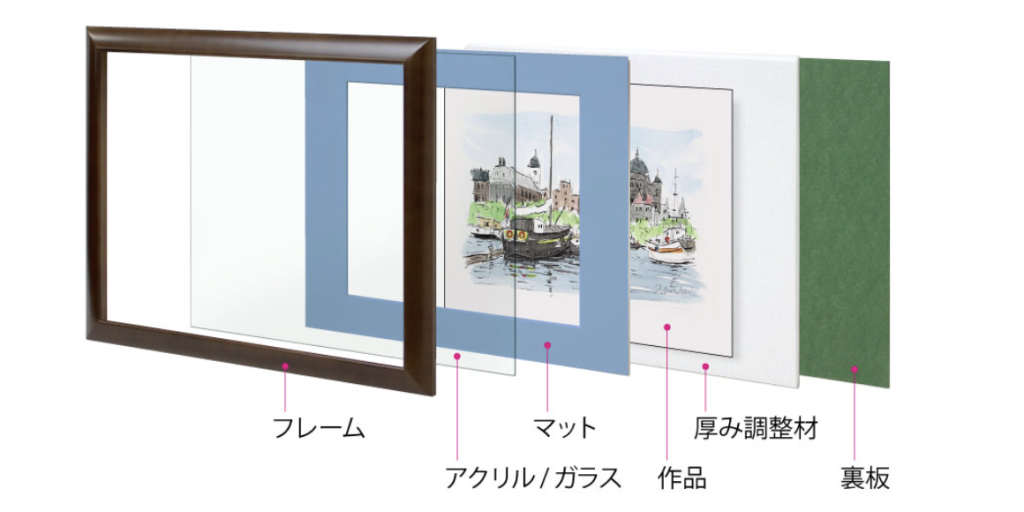
A "mat" is the thick board placed between the work and the frame.
You often see them in museums and galleries, and they serve to set off the work!
Far from mere decoration, it's a key element that greatly shapes the impression of the work.
For product details and the source, see here
The mat's width and color change the impression!
A single choice in your mat can completely transform how a work looks!
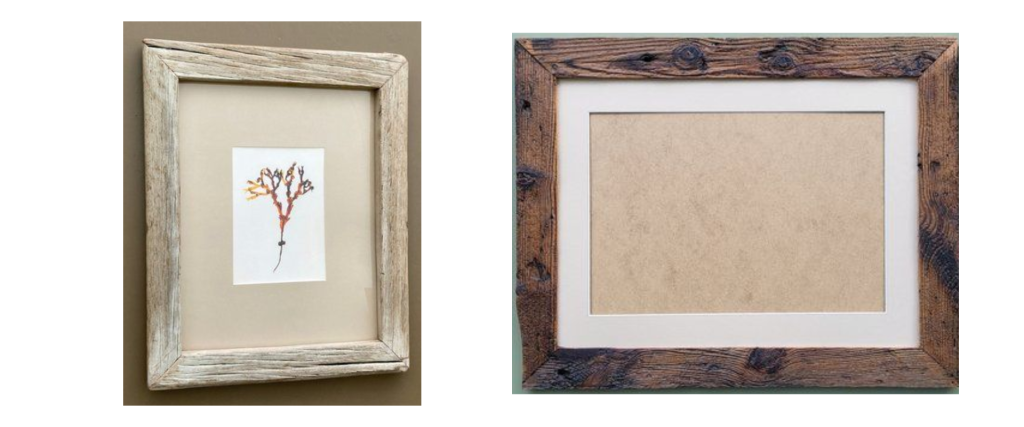
Make the mat wider, and… the work gains more margin and a refined air.
A sense of luxury and calm emerges, evoking the atmosphere of a museum.
Make the mat narrower, and… the work feels more like it fills the frame, giving a bold impression.
This also suits displaying in a compact space.
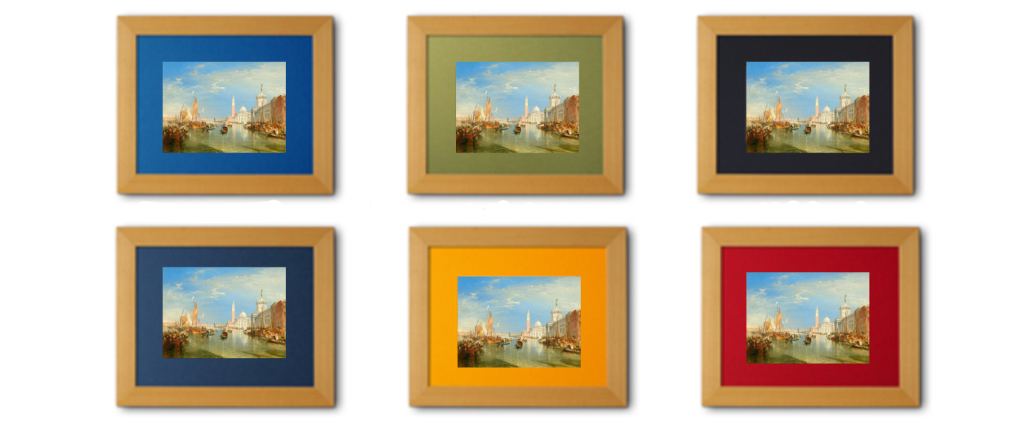
The color of the mat is an important point as well.
Choosing one color from within the work creates a sense of unity, achieving a balance where art and mat feel as one!
Depending on how you use the mat, you can fine-tune a work's mood.
Choose the mat that best suits your space and the style of the art!
Easy steps you can do yourself!
First, prepare the items you'll need for framing.

Set the work onto the mat board
If you use a mat, you'll need to cut it to fit the work and carefully check how it looks!
1. Decide the position of the mat
Place the mat over the work and check which part to reveal.
Even margins make it look well balanced.
2. Fix the work to the backing board
Using masking tape or art tape, lightly fix the work to the backing board.
(Strong tape is a no! It may damage the work.)
3. Lay the mat board over it
Place the mat over the work and confirm that it shows clearly.
Set it into the frame
Clean the clear pane
Wipe the acrylic or glass pane that comes with the frame with a soft cloth to remove dust.
Put the work into the frame
Set them into the frame in this order: clear pane → matted work → backing board.
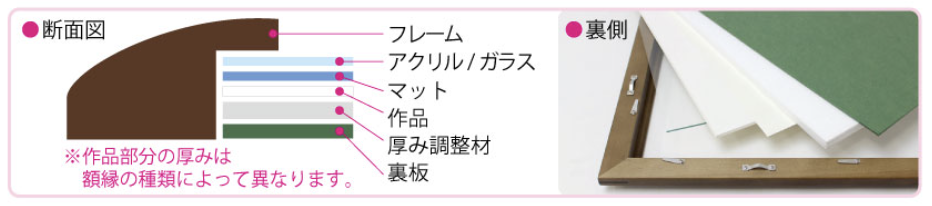
Secure it firmly
Use the stoppers or fasteners on the back of the frame to hold everything firmly in place.
If you're unsure about the mat's size or color, we also recommend trying the Mat Simulator!
You can purchase the perfect mat right then and there!
In closing
Framing not only displays artworks and photos beautifully, but also plays the important role of protecting the work and setting the mood of a space.
✅ Types of frames and how to choose
Depending on the material and design of the frame — wood, metal, and so on — the impression of the work changes greatly!
Choose one that suits the mood of the work.
✅ How you use the mat changes the look
By adjusting the mat's width and color, the work stands out all the more.
You can tune it to your taste — a calm, museum-like air, or a bold, well-defined display!
✅ You can frame it easily yourself!
Once you've got the basic steps down, you can frame at home with ease.
It's possible to give your work an even more beautiful finish!
By being thoughtful about framing, your favorite art becomes an even closer part of your life.
Do find the framing style that's just right for your space, and enjoy a life with art!
To purchase art or seek advice, see here
▶ +ART
▶ ONLINE SHOP


